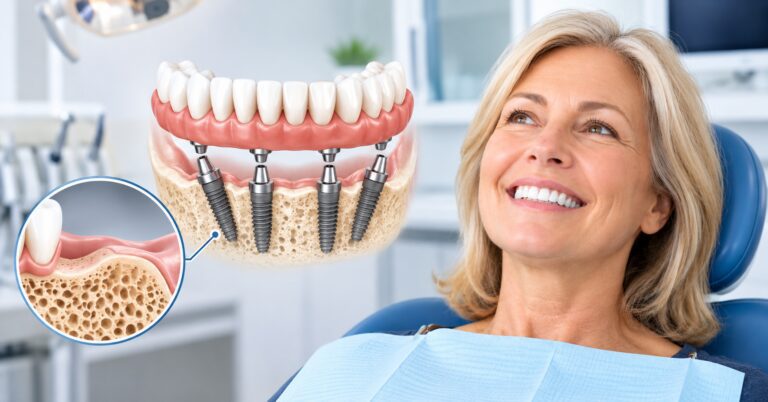
Dental implants are considered the gold standard for replacing missing teeth because of their durability, natural appearance, and high success rate. In fact, modern dental implants have a success rate of 95–98% when placed by an experienced implant dentist and maintained properly.
However, while uncommon, dental implant failure can occur. Understanding why implants fail, recognizing the warning signs early, and seeking prompt treatment can help save your implant and protect your oral health.
In this guide, we’ll explain everything you need to know about dental implant failure, including causes, symptoms, treatment options, and prevention strategies.
Also Read – How Much Do Dental Implants Cost in the USA? (2026 Guide)
What Is Dental Implant Failure?
Dental implant failure occurs when the implant does not properly integrate with the jawbone or becomes unstable after successful placement.
Failure can happen:
- Shortly after surgery (early failure)
- Months or years later (late failure)
Although implant failure is rare, early diagnosis greatly improves the chances of successful treatment.
Also Read – Dentist Perforated My Sinus and Didn’t Tell Me
Early vs. Late Dental Implant Failure
Early Implant Failure
Early failure usually occurs before the implant fully fuses with the jawbone.
Common reasons include:
- Poor osseointegration
- Infection
- Insufficient bone density
- Surgical complications
- Excessive pressure on the implant during healing
Late Implant Failure
Late failure happens months or even years after the implant has healed.
Typical causes include:
- Peri-implantitis
- Gum disease
- Bone loss
- Teeth grinding (Bruxism)
- Smoking
- Poor oral hygiene
- Trauma or injury
Common Causes of Dental Implant Failure
1. Infection (Peri-Implantitis)
The most common cause of implant failure is peri-implantitis, a bacterial infection affecting the gum and bone surrounding the implant.
Symptoms include:
- Swollen gums
- Bleeding
- Pus
- Bone deterioration
- Implant loosening
Without treatment, the implant may eventually fail.
2. Poor Bone Quality
Dental implants require adequate bone support.
Patients with severe bone loss may need:
- Bone grafting
- Sinus lift surgery
- Ridge augmentation
Without enough bone, implants cannot remain stable.
3. Smoking
Smoking significantly increases implant failure risk because nicotine:
- Reduces blood flow
- Slows healing
- Increases infection risk
- Interferes with bone integration
Many implant specialists recommend quitting smoking before and after implant surgery.
4. Poor Oral Hygiene
Dental implants require the same level of care as natural teeth.
Failing to brush, floss, and attend regular dental visits can lead to bacterial buildup and implant complications.
5. Medical Conditions
Certain health conditions may affect healing, including:
- Uncontrolled diabetes
- Osteoporosis
- Autoimmune disorders
- Cancer treatments
- Immune suppression
Patients should discuss their medical history with their dentist before treatment.
6. Teeth Grinding (Bruxism)
Grinding or clenching places excessive pressure on implants.
Over time, this can lead to:
- Loose implants
- Fractured crowns
- Bone loss
- Implant failure
Night guards often help protect implants from excessive force.
7. Poor Implant Placement
Successful implants require careful planning.
Problems can occur if:
- The implant is positioned incorrectly.
- Nearby nerves are affected.
- The bite places excessive force on the implant.
- The implant is overloaded too soon.
This is why choosing an experienced implant surgeon is essential.
Also Read – Glendale, CA Snap-on Dentures
Signs and Symptoms of Dental Implant Failure
Contact your dentist immediately if you notice:
- Persistent pain
- Swollen gums
- Bleeding around the implant
- Bad breath
- Pus discharge
- Loose implant
- Difficulty chewing
- Gum recession
- Bone loss visible on X-rays
Early treatment often prevents complete implant failure.
How Is Dental Implant Failure Diagnosed?
A dentist will evaluate the implant using:
- Clinical examination
- Digital X-rays
- 3D CBCT imaging
- Gum measurements
- Bite analysis
These tests determine whether the implant can be saved or requires replacement.
Treatment Options for Dental Implant Failure
Treatment depends on the underlying cause.
Deep Cleaning
For early infections, professional cleaning combined with antibiotics may stop disease progression.
Antibiotic Therapy
Bacterial infections often respond to localized or oral antibiotics when diagnosed early.
Bone Grafting
If bone loss has occurred, bone grafting may rebuild the area before placing a new implant.
Implant Removal
If the implant cannot be saved, it may need to be removed. After healing, a replacement implant can often be placed.
New Dental Implant Placement
Many patients successfully receive another implant once the underlying problem has been corrected.
Can a Failed Dental Implant Be Replaced?
Yes.
In most cases, a failed implant can be replaced after:
- Eliminating infection
- Healing the surrounding tissue
- Restoring lost bone if necessary
Success rates for replacement implants remain very high when performed by experienced implant specialists.
How to Prevent Dental Implant Failure
You can significantly reduce your risk by following these recommendations:
- Brush twice daily.
- Floss every day.
- Attend routine dental checkups.
- Avoid smoking and tobacco products.
- Follow all post-operative instructions.
- Wear a night guard if you grind your teeth.
- Manage medical conditions such as diabetes.
- Choose an experienced implant dentist.
Good oral hygiene and regular maintenance are the keys to long-term implant success.
When Should You See a Dentist?
Seek immediate dental care if you experience:
- Implant mobility
- Persistent swelling
- Bleeding that doesn’t stop
- Severe pain
- Pus around the implant
- Sudden changes in your bite
Prompt treatment improves the chances of saving the implant.
Why Experience Matters
Dental implant treatment requires advanced planning, precise placement, and long-term follow-up. Choosing a skilled implant dentist who uses advanced imaging and evidence-based techniques can greatly reduce the risk of complications and improve long-term outcomes.
Frequently Asked Questions (FAQs)
Can a failed dental implant be saved?
Yes. If diagnosed early, infections and minor complications can often be treated without removing the implant.
What is the most common cause of dental implant failure?
Peri-implantitis (infection around the implant) is one of the leading causes of late implant failure.
How long does a dental implant last?
With proper care, dental implants can last 20 years or more, and many last a lifetime.
Is dental implant failure common?
No. Dental implants have a success rate of approximately 95–98%, making them one of the most reliable tooth replacement options.
Does smoking increase implant failure risk?
Yes. Smoking reduces blood flow, delays healing, and significantly increases the risk of implant complications.