
Dental implant surgery in Glendale, CA can replace missing teeth with a stable, long-lasting foundation for crowns, bridges, dentures, or full-arch restorations. Dr. Robert Thein, DDS, ABOI, ICOI, provides implant surgery and restoration with treatment planning focused on bone health, function, aesthetics, and long-term stability.
Located in La Crescenta, California Implant Dentist serves patients from Glendale, La Crescenta-Montrose, Pasadena, Burbank, La Cañada Flintridge, Sunland-Tujunga, Eagle Rock, and surrounding communities.
Whether you need to replace one missing tooth, several teeth, or an entire arch—or you are seeking evaluation after a failed implant—Dr. Thein provides personalized implant treatment based on your anatomy, oral health, and long-term goals.
Ready to discuss your options? Request an Implant Consultation with Dr. Thein.
Why Choosing the Right Dental Implant Surgeon Matters
Dental implant treatment involves more than placing a titanium implant into the jaw. Successful treatment requires careful planning of the implant position, available bone, bite, surrounding anatomy, and final restoration.
The position and angle of an implant can influence how the final tooth looks, functions, and fits within your bite. For this reason, surgical planning should take the final restoration into consideration from the beginning.
Dr. Robert Thein provides both dental implant surgery and implant restoration, allowing the surgical and restorative phases of treatment to be planned together. Rather than placing an implant without considering the final tooth, his approach begins with the intended restorative result and works backward to determine appropriate implant positioning.
Learn more about his education, training, and credentials: Meet Dr. Robert Thein.
What Is Dental Implant Surgery?
Dental implant surgery is a procedure used to replace the root of a missing tooth with a small titanium implant. After the implant integrates with the jawbone, it can support a dental crown, bridge, denture, or full-arch restoration.
The goal of dental implant surgery is not simply to place an implant. Treatment planning also considers:
- Jawbone volume and density
- Gum and periodontal health
- Nerve and sinus anatomy
- Position of surrounding teeth
- Bite and chewing function
- Appearance of the final restoration
- Long-term stability
Every patient’s treatment needs are different. A comprehensive evaluation helps determine whether a dental implant, multiple implants, or a full-arch solution is appropriate.
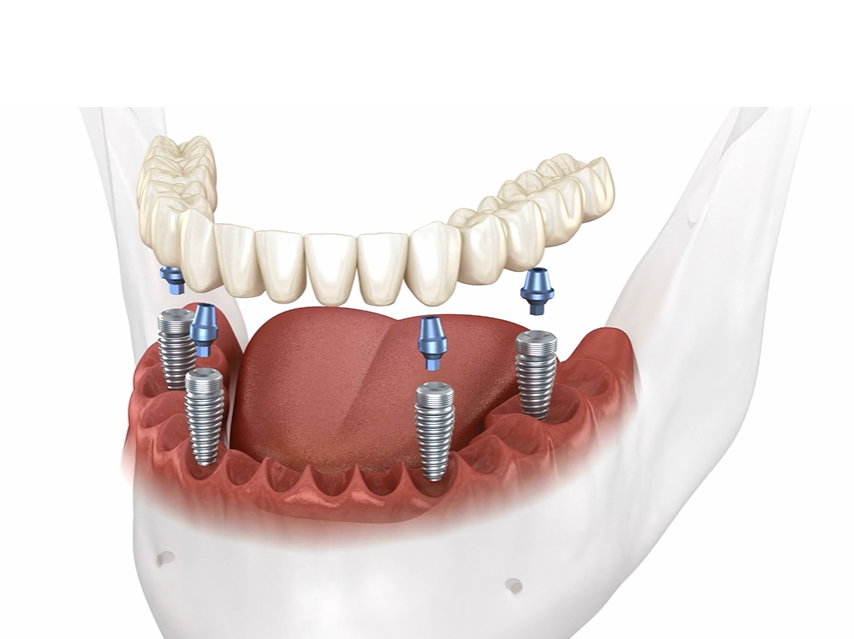
Dental Implant Surgery Options
Dr. Robert Thein provides implant solutions for a range of tooth-loss situations.
Single Tooth Dental Implants
A single dental implant can replace one missing tooth with an implant-supported crown designed to restore appearance and function.
Multiple Teeth Dental Implants
When several teeth are missing, multiple dental implants can support individual restorations or an implant-supported bridge, depending on the patient’s needs.
Full Mouth Dental Implants
Patients missing most or all of their teeth may benefit from a comprehensive full-mouth implant reconstruction designed around function, aesthetics, and long-term stability.
Full-Arch Dental Implants & All-on-4
Full-arch implant treatment can replace an entire arch of missing teeth with a fixed implant-supported restoration. Depending on your anatomy and treatment goals, an All-on-4 or All-on-X approach may be considered.
Implant-Supported Dentures
Dental implants can provide additional stability for patients who are struggling with loose or uncomfortable traditional dentures.
Bone Grafting for Dental Implants
If there is insufficient bone for implant placement, bone grafting may help rebuild the foundation needed for implant treatment.
Sinus Lift Surgery
For some patients with inadequate bone height in the upper jaw, a sinus lift may be considered as part of the implant treatment plan.
3D CT Imaging for Precise Dental Implant Planning
Before dental implant surgery, Dr. Thein uses 3D CT imaging to evaluate the anatomy that can affect implant placement.
A three-dimensional scan can provide detailed information about:
- Jawbone volume and density
- Nerve position
- Sinus anatomy
- Implant placement sites
- Areas that may require bone grafting
This information allows treatment to be planned around your individual anatomy rather than relying only on a standard two-dimensional X-ray.
The objective is to identify important anatomical considerations before surgery and develop a treatment plan that supports both surgical safety and the final restoration.
What Can Go Wrong With Dental Implant Surgery?
Like any surgical procedure, dental implant treatment requires careful planning. Certain complications can be associated with implant placement, including problems involving nerves, the sinus, inadequate bone support, infection, or implant positioning.
Some issues may not become obvious immediately, which makes proper diagnosis and treatment planning particularly important.
| Surgical Consideration | Why It Matters |
|---|---|
| Implant position near a nerve | May affect sensation and comfort |
| Implant position near the sinus | Can create sinus-related complications |
| Inadequate bone support | May affect implant stability |
| Incorrect implant positioning | Can make the final restoration more difficult to design |
| Poor coordination between surgery and restoration | May compromise the functional or aesthetic result |
Dr. Thein uses 3D CT imaging and restorative planning to evaluate these considerations before surgery.
Your Dental Implant Surgery Process
Understanding what happens before, during, and after treatment can make the process easier to navigate.
1. Implant Consultation
Your treatment begins with an evaluation of your missing or failing teeth, oral health, bone condition, and treatment goals.
2. 3D Imaging & Treatment Planning
3D CT imaging helps evaluate your jawbone, nerves, sinus anatomy, and implant sites.
3. Personalized Surgical Plan
Dr. Thein develops a treatment plan based on your anatomy and the final restoration planned for your smile.
4. Dental Implant Placement
The implant is surgically positioned within the jawbone according to the treatment plan.
5. Healing & Osseointegration
The implant needs time to integrate with the surrounding bone. The length of this stage varies depending on the individual case.
6. Final Restoration
Once appropriate healing has occurred, the planned crown, bridge, denture, or full-arch restoration can be completed.
Schedule a Dental Implant Consultation
How Long Does Dental Implant Surgery Take?
The length of dental implant treatment varies from patient to patient.
Your overall timeline may depend on:
- Number of implants required
- Condition of the jawbone
- Need for bone grafting
- Need for a sinus lift
- Whether a tooth must be extracted
- Type of final restoration
- Individual healing
Although some practices promote very short treatment timelines, implant healing is a biological process. Osseointegration, the process through which the implant integrates with the jawbone, generally takes time.
Dr. Thein discusses the expected treatment timeline and the factors affecting it during your consultation rather than assuming that the fastest option is appropriate for every patient.
Who Is a Candidate for Dental Implant Surgery?
Many healthy adults with adequate bone support may be candidates for dental implants. However, candidacy cannot be determined from a generic checklist alone.
During your evaluation, Dr. Thein considers:
- Number and location of missing or failing teeth
- Gum and periodontal health
- Available jawbone
- Need for bone grafting
- Overall health and healing ability
- Smoking status
- Individual treatment goals
Patients who have previously been told they do not have enough bone may still have treatment options. Bone grafting or a sinus lift may be considered when additional support is needed.
Schedule a Dental Implant Candidacy Consultation
For patients missing most or all teeth in one arch, a full-arch or All-on-4 treatment approach may also be discussed.
A Real Patient’s Dental Implant Journey
One of Dr. Thein’s patients, a professional singer, had lost several teeth due to gum disease and needed implants that would remain stable during performances.
Her treatment also required attention to speech and articulation because the position and shape of implant-supported teeth can influence the way the mouth functions.
Because Dr. Thein handled both the surgical and restorative aspects of her treatment, implant position, depth, angle, and final tooth design were planned together around her specific needs.
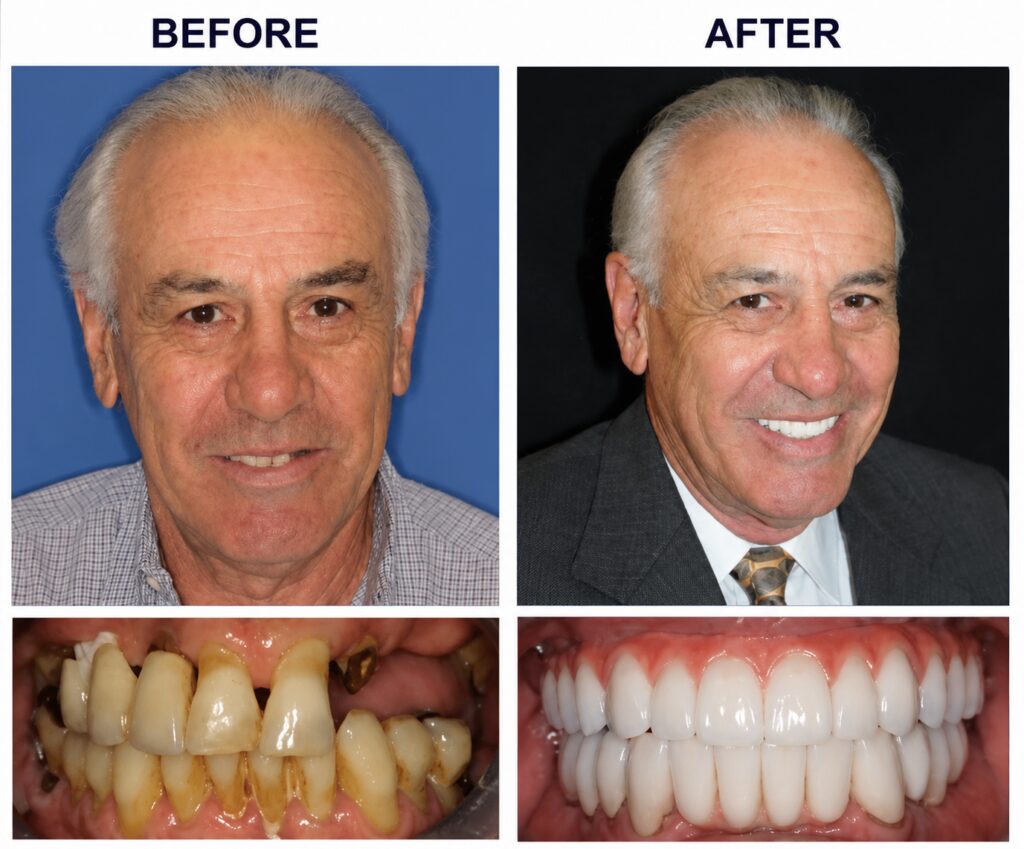
See Real Dental Implant Results
View Dental Implant Cases & Before-and-After Results
Important: Use actual patient case photographs here rather than stock images. This section is one of your strongest opportunities to build trust and increase consultation requests.
One Provider for Implant Surgery & Restoration
Dental implant treatment can involve separate surgical and restorative providers. Both approaches can work, but coordination between the surgical and restorative phases is important.
Dr. Thein provides both implant surgery and implant restoration. This means the planned position of the final restoration can be considered when determining implant placement.
For patients seeking a second opinion, dealing with a previously failed implant, or facing a complex reconstruction, having the surgical and restorative aspects evaluated together can provide another perspective on treatment planning.
How Much Does Dental Implant Surgery Cost in Glendale, CA?
The cost of dental implant surgery in Glendale, CA varies according to each patient’s treatment needs.
Factors that can affect the total cost include:
- Number of implants required
- Type of final restoration
- Bone grafting requirements
- Sinus lift requirements
- Tooth extraction
- Complexity of the case
- Full-arch versus individual tooth replacement
There is no single price that applies to every dental implant case.
A 3D CT-based evaluation allows Dr. Thein to assess your individual needs and provide a more accurate, case-specific treatment estimate.
Learn More About Dental Implant Costs
Why Patients Choose Dr. Robert Thein
Patients seeking dental implant surgery in Glendale and surrounding communities choose Dr. Thein for his implant-focused approach and surgical and restorative training.
Implant-Focused Care
His practice is dedicated to dental implant surgery and restoration rather than treating implants as one service among many.
Board-Certified Dental Implant Surgeon
Dr. Thein, DDS, ABOI, ICOI, is a board-certified dental implant surgeon.
3D CT-Based Planning
Treatment planning incorporates three-dimensional imaging to evaluate anatomy before implant placement.
Surgical & Restorative Expertise
The surgical position of the implant is planned with the final restoration in mind.
Complex Implant Cases
Patients with challenging cases or implants placed elsewhere can be evaluated for additional treatment options.
Personalized Treatment Planning
Each case is evaluated according to the patient’s oral health, anatomy, treatment goals, and long-term needs.
Dental Implant Surgery for Patients in Glendale & Nearby Communities
Our implant practice is located in La Crescenta, CA, near Glendale, and welcomes patients from surrounding communities.
We serve patients from:
- La Crescenta-Montrose
- Glendale
- Pasadena
- Burbank
- La Cañada Flintridge
- Sunland
- Tujunga
- Eagle Rock
- Surrounding San Gabriel Valley and San Fernando Valley communities
If you are searching for dental implant surgery near Glendale, you can schedule a consultation at our La Crescenta office to discuss your treatment options.
Dental Implant Surgery FAQs
Is dental implant surgery painful?
Dental implant surgery is performed with local anesthesia, and sedation options may be available. Patients may experience soreness or discomfort during recovery, but your treatment and aftercare instructions are designed to support a comfortable healing process.
How long does dental implant surgery take?
The surgical portion of treatment varies depending on the number of implants and complexity of the case. Your overall treatment timeline may be longer because the implant needs time to integrate with the jawbone before the final restoration is completed.
How long does it take to recover from dental implant surgery?
Recovery varies depending on the procedure and individual healing. Osseointegration generally takes several months, although the exact timeline depends on factors such as bone quality, grafting, and the type of restoration.
Who is a candidate for dental implants?
Many adults with missing or failing teeth may be candidates for dental implants. Candidacy depends on oral health, bone support, healing ability, and other individual factors. A 3D CT-based evaluation can help determine your treatment options.
Can I get dental implants if I have been told I don’t have enough bone?
Possibly. Some patients with inadequate bone may become candidates after procedures such as bone grafting or a sinus lift. A detailed evaluation is needed to determine what is appropriate for your case.
How much does dental implant surgery cost in Glendale, CA?
The cost varies based on the number of implants, type of restoration, bone requirements, and complexity of treatment. A personalized consultation and 3D imaging can help determine your specific treatment needs and cost.
Do you provide All-on-4 dental implants?
Yes. Full-arch implant treatment, including All-on-4 or All-on-X approaches, may be considered for appropriate patients who are missing most or all of their teeth in an arch.
Can you evaluate a failed dental implant?
Yes. Patients with loose, failing, or previously unsuccessful dental implants can be evaluated to determine the underlying issue and discuss possible treatment options.
Why is a 3D CT scan needed before dental implant surgery?
A 3D CT scan provides detailed information about the jawbone, nerve position, sinus anatomy, and potential implant sites. This information helps with treatment planning and implant positioning.
Where is your dental implant practice located?
California Implant Dentist is located at 3730 Foothill Blvd, La Crescenta, CA 91214, and serves patients from Glendale and surrounding communities.
Ready to Explore Your Dental Implant Options?
Whether you need to replace one missing tooth, restore multiple teeth, rebuild an entire arch, or seek a second opinion about previous implant treatment, Dr. Robert Thein can evaluate your individual needs.
Schedule a Dental Implant Consultation or Call: (833) 357-7578