If you are considering dentures and wondering, “Are snap-in dentures better than traditional dentures?”, the answer depends on your oral health, jawbone condition, lifestyle, budget, and treatment goals.
Snap-in dentures, also called implant-supported removable dentures, use dental implants to provide additional retention and stability. Traditional dentures, on the other hand, rest directly on the gums and are held in place primarily through their fit and oral anatomy.
Neither option is automatically better for every patient. A consultation with an experienced implant dentist can help determine which solution is appropriate for you.
What Are Snap-In Dentures?
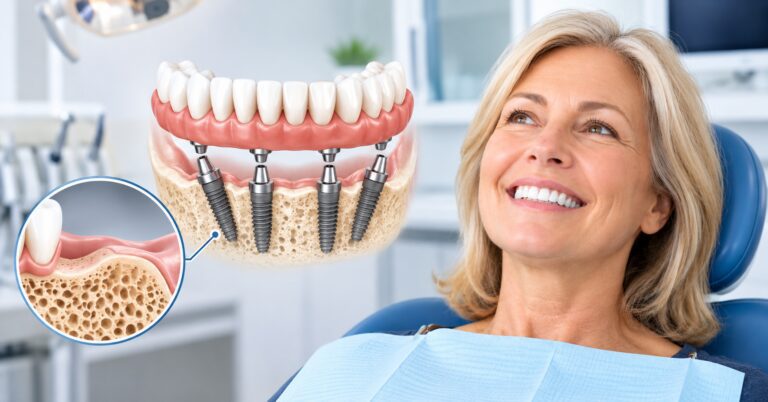
Snap-in dentures are removable dentures that attach to dental implants through specialized attachment components. The implants are placed in the jawbone and provide support for the denture.
Unlike traditional dentures, which rely primarily on the gums for support, snap-in dentures are retained by implants. This can provide a more secure feel for many patients.
The number of implants needed and the type of attachment system used can vary depending on your individual anatomy and treatment plan.
What Are Traditional Dentures?
Traditional dentures are removable dental appliances designed to replace missing teeth and surrounding oral structures. They can be used to replace some or all of the teeth in an arch.
Traditional dentures do not require dental implant surgery. They are designed to fit over the gums and may be supported by the natural shape of the mouth, surrounding tissues, and denture fit.
For some patients, traditional dentures can be an appropriate and more accessible tooth-replacement option.
Snap-In Dentures vs. Traditional Dentures
Understanding the differences can help you have a more informed conversation with your dentist.
Snap-In Dentures
- Supported by dental implants
- Removable for cleaning
- Designed to provide additional retention
- Require implant placement
- Require a comprehensive implant evaluation
- May provide greater stability during everyday activities
- Usually involve a longer treatment process than conventional dentures
Traditional Dentures
- Rest primarily on the gums
- Removable for cleaning
- Do not require implant surgery
- Can often be provided without implant placement
- May be more affordable initially
- Require proper fitting and ongoing adjustments
- Can be a suitable option for patients who are not candidates for implants
Are Snap-In Dentures More Stable?
One of the main advantages of snap-in dentures is implant-based retention.
Traditional dentures can sometimes move while eating or speaking, particularly if the fit changes over time. Snap-in dentures use dental implants and attachments to help hold the removable denture in position.
However, individual results vary. Implant-supported dentures still require proper planning, fitting, maintenance, and regular dental care.
Are Snap-In Dentures More Comfortable?
Comfort depends on several factors, including the fit of the denture, the condition of the gums, implant positioning, oral anatomy, and individual sensitivity.
Because snap-in dentures receive support from implants, some patients may experience less movement than they would with conventional dentures.
That does not mean snap-in dentures are automatically more comfortable for everyone. Your dentist should evaluate your mouth and discuss the potential benefits and limitations before treatment.
Can You Eat Better With Snap-In Dentures?
A more stable denture can make everyday activities such as chewing and speaking feel more secure for some patients.
Traditional dentures can also function effectively when properly fitted, but movement may occur in some situations.
Your dentist can explain what you can reasonably expect from either option based on your specific circumstances.
Are Snap-In Dentures More Expensive?
In many cases, snap-in dentures cost more initially than traditional dentures because implant treatment involves additional procedures, planning, surgical placement, and components.
The total cost can depend on:
- Number of dental implants needed
- Type of denture and attachment system
- Diagnostic imaging
- Bone grafting or other preparatory procedures
- Laboratory and restoration costs
- Follow-up care
- Individual oral health needs
Instead of comparing prices alone, ask your dentist what is included in the complete treatment plan.
Who Is a Good Candidate for Snap-In Dentures?
A patient may be considered for snap-in dentures after an implant dentist evaluates their oral health, jawbone, and overall treatment needs.
Your dentist may consider:
- Available jawbone
- Gum health
- Existing teeth or dentures
- Oral hygiene
- Medical and dental history
- Ability to maintain implants and dentures
- Desired results
- Overall treatment goals
Some patients may need additional procedures, such as bone grafting, before implants can be placed.
An in-person examination and appropriate imaging are necessary to determine whether implant-supported dentures are suitable for you.
Snap-In Dentures vs. Traditional Dentures: Which Should You Choose?
There is no universal answer to which type of denture is better.
Snap-in dentures may be worth considering if stability and implant retention are important to you and you are a suitable candidate for dental implants.
Traditional dentures may be appropriate if you prefer a non-implant option, want to avoid implant surgery, or have circumstances that make implant treatment unsuitable.
Your dentist can compare both options based on your oral health, goals, timeline, and budget.
How Long Do Snap-In Dentures Last?
The lifespan of a snap-in denture depends on factors such as oral hygiene, wear, maintenance, the condition of the denture, and the health of the supporting implants.
The denture and its attachment components may require maintenance or replacement over time. Dental implants also require ongoing professional care and good oral hygiene.
Regular dental appointments allow your dentist to monitor the implants, attachments, denture fit, and surrounding tissues.
How Do You Care for Snap-In Dentures?
Good maintenance is important for protecting both your denture and implant-supported components.
Your dental team may recommend:
- Removing and cleaning the denture as instructed
- Cleaning around the implants and attachment components
- Maintaining good oral hygiene
- Following your dentist’s cleaning instructions
- Attending regular dental examinations
- Reporting changes in fit, discomfort, or looseness
Proper maintenance can help support the long-term health and function of your implant-supported restoration.
Why Choose an Experienced Implant Dentist?
If you are considering snap-in dentures, choosing an experienced implant dentist is an important part of the process.
A qualified dentist can evaluate your jawbone and oral health, explain your treatment options, discuss potential risks and benefits, and create a personalized treatment plan.
At California Implant Dentist, Dr. Robert Thein focuses on implant dentistry and provides personalized treatment planning for patients considering dental implants and implant-supported restorations.
If you are looking for snap-in dentures near me in La Crescenta-Montrose, Pasadena, Glendale, Burbank, La Cañada, Sunland, Tujunga, Eagle Rock, or surrounding areas, a consultation can help you understand whether implant-supported dentures may be right for you.
Frequently Asked Questions
Are snap-in dentures better than traditional dentures?
Snap-in dentures may offer greater stability because they are retained by dental implants. However, traditional dentures can be an effective option for many patients. The right choice depends on your individual needs and whether you are a suitable candidate for implants.
Do snap-in dentures require surgery?
Yes. Snap-in dentures typically require dental implants to be surgically placed in the jawbone before the denture can be attached to them.
Can you sleep with snap-in dentures?
Whether you should wear your snap-in dentures overnight depends on your specific restoration and your dentist’s instructions. Follow the recommendations provided by your dental team.
Are snap-in dentures removable?
Yes. Snap-in dentures are designed to be removed by the patient for cleaning and maintenance, unlike some fixed implant-supported restorations.
How many implants are needed for snap-in dentures?
The number of implants varies depending on the patient’s anatomy, jaw, treatment plan, and type of restoration. Your implant dentist can determine the appropriate number after an examination and imaging.
Are snap-in dentures worth it?
For patients who want greater denture retention and are suitable candidates for implants, snap-in dentures may be a worthwhile option. A personalized consultation is the best way to determine whether the benefits align with your needs.