Yes. Seniors can often get dental implants, and age alone does not automatically prevent someone from receiving implant treatment. In fact, research reviewing dental implant therapy in adults aged 65 and older found that age alone should not be considered a limiting factor.
For older adults who have missing teeth, dental implants can provide a stable foundation for crowns, bridges, or implant-supported dentures. However, candidacy depends more on overall health, jawbone condition, gum health, oral hygiene, and the ability to heal properly than on a person’s age.
If you are considering dental implants in Glendale, a dental implant specialist can evaluate your oral and general health and determine whether implants are appropriate for you.
Is There an Age Limit for Dental Implants?
There is no specific upper age limit that automatically rules someone out for dental implants.
Instead, your dentist will consider factors such as:
- The number and location of missing teeth
- Jawbone density and volume
- Gum and periodontal health
- Overall health
- Medications you take
- Smoking or tobacco use
- Oral hygiene
- Your ability to maintain regular dental care
- Any conditions that could affect healing
The American Dental Association notes that older adults can have more complex medical and dental needs, including multiple medications and conditions that may affect dental treatment.
This means a healthy 75-year-old may be a better candidate for implants than a younger person with uncontrolled health issues or significant oral disease.
What Makes a Senior a Good Candidate for Dental Implants?
A senior may be a good candidate if they have adequate bone to support an implant, healthy oral tissues, and no uncontrolled condition that could significantly interfere with healing. Mayo Clinic also identifies adequate jawbone, healthy oral tissues, and the absence of health conditions that interfere with bone healing as important considerations.
- Adequate Jawbone
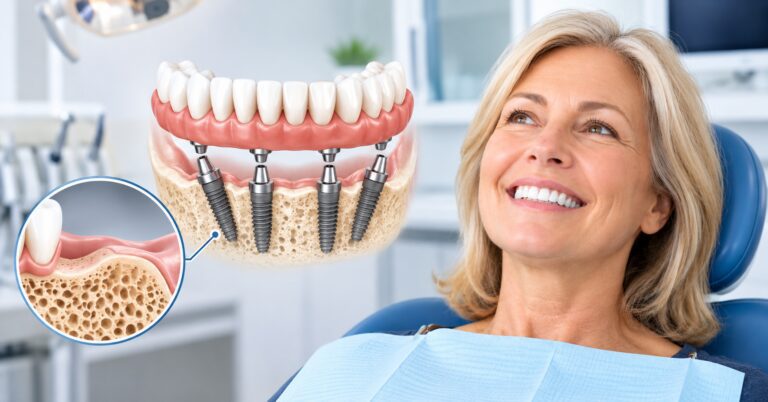
Dental implants are placed into the jawbone, where the implant gradually integrates with the surrounding bone. This process, called osseointegration, provides the foundation needed to support the replacement tooth.
Some seniors experience bone loss after losing teeth. If there isn’t enough bone, a bone graft may sometimes be recommended before or as part of implant treatment.
2. Healthy Gums
Healthy gums are important for successful implant treatment. Existing gum disease should generally be evaluated and treated before implant placement.
A comprehensive examination allows your dentist to assess your gums, remaining teeth, and supporting bone before developing an implant treatment plan.
3. Good Overall Health
Your general health is an important part of implant planning.
Certain medical conditions may affect healing or increase surgical risks. Your dentist should know about your medical history, including current medications and supplements, before treatment. Mayo Clinic recommends a review of medical history and medications as part of dental implant preparation.
- Good Oral Hygiene
Dental implants still require ongoing care. Seniors considering implants should be comfortable maintaining daily oral hygiene and attending regular dental appointments.
Proper cleaning around the implant, crown, gums, and remaining natural teeth can help maintain oral health over the long term.
Can Seniors Get Dental Implants If They Have Bone Loss?
Possibly.
Bone loss does not necessarily mean you cannot receive dental implants. Your dentist can evaluate the amount and quality of available bone using dental X-rays and, when appropriate, 3D imaging.
If the jawbone isn’t thick or strong enough to support an implant, bone grafting may be recommended to create a more suitable foundation. Depending on the patient’s individual circumstances, the graft and implant may be performed separately or in conjunction with other procedures.
Can Seniors Get Dental Implants With Medical Conditions?
Having a medical condition doesn’t automatically mean you cannot receive dental implants.
However, certain conditions may require additional evaluation or coordination with your physician. Your implant dentist will consider whether your condition is controlled and whether it could affect healing or surgical safety.
Older adults may also take several prescription and over-the-counter medications, making a complete medication review particularly important before treatment.
Important: Never stop or change a medication on your own because you are preparing for dental implant surgery. Your dentist and physician can determine whether any medication requires special consideration.
Are Dental Implants Safe for Older Adults?
Dental implants can be an appropriate treatment option for many older adults when the patient is carefully evaluated and properly planned for.
As with any surgical procedure, dental implant treatment has potential risks. These can include infection, injury to surrounding structures, nerve-related symptoms, sinus complications in certain upper-jaw cases, and failure of the implant to properly integrate with bone.
Your individual risk depends on your health, anatomy, oral condition, treatment plan, and other factors.
What Is the Dental Implant Process for Seniors?
The process varies from patient to patient, but it commonly involves several stages:
Step 1: Dental Examination
Your dentist evaluates your teeth, gums, jawbone, and overall oral health.
Step 2: Imaging and Treatment Planning
X-rays and, when appropriate, 3D imaging can help determine whether there is enough bone and identify the best position for the implant.
Step 3: Bone Grafting if Needed
If there isn’t sufficient bone, a bone-grafting procedure may be recommended.
Step 4: Implant Placement
The dental implant is surgically placed into the jawbone.
Step 5: Healing and Osseointegration
The bone gradually integrates with the implant, creating a stable foundation for the replacement tooth. This healing period can take several months.
Step 6: Replacement Tooth
After the implant has adequately healed, an abutment and customized crown, bridge, or implant-supported denture can be placed.
Dental Implants vs. Dentures for Seniors
Both dental implants and dentures can replace missing teeth, but they work differently.
Traditional dentures:
- Are removable
- Do not require implant surgery
- Can replace multiple missing teeth
- May require periodic adjustment as the mouth changes
Dental implants:
- Are anchored into the jawbone
- Can support individual crowns, bridges, or dentures
- Can provide a stable foundation for replacement teeth
- Require surgery and a healing period
For some seniors, implant-supported dentures may offer an alternative to traditional removable dentures. The best option depends on the patient’s oral health, anatomy, preferences, and treatment goals.
What Is the Cost of Dental Implants for Seniors?
The cost of dental implants for seniors can vary significantly depending on the number of teeth being replaced, the type of implants used, and the overall condition of the patient’s oral health. A single dental implant may cost less than a full-arch restoration, while additional procedures such as bone grafting or tooth extraction can increase the total treatment cost.
For seniors, the treatment plan may also include a comprehensive evaluation of bone density, gum health, and existing medical considerations before implants are placed. During a consultation, an implant dentist can assess these factors and provide a personalized estimate based on the patient’s specific needs. Dental insurance may cover certain portions of the treatment, although coverage for implants varies by plan.
Full Mouth Dental Implants for Seniors
Full mouth dental implants for seniors can be an option for those who have lost most or all of their teeth or have teeth that can no longer be restored. Instead of replacing every missing tooth individually, an implant-supported full-mouth restoration can use strategically placed implants to support a fixed set of replacement teeth.
The suitability of full-mouth dental implants depends on factors such as jawbone volume, gum health, overall oral health, and the patient’s ability to maintain good oral hygiene. Seniors should receive a thorough dental examination and imaging before treatment to determine whether implants are appropriate. In some cases, bone grafting or other preparatory procedures may be recommended before implant placement.
With proper planning and ongoing maintenance, implant-supported teeth can provide seniors with improved chewing ability, stability, and a more natural-looking smile.
How Can Seniors Improve Their Chances of Successful Dental Implants?
Before and after implant treatment, seniors can support their oral health by:
- Following their dentist’s instructions carefully
- Maintaining excellent daily oral hygiene
- Attending recommended dental checkups
- Managing existing dental disease
- Avoiding tobacco
- Providing their dentist with an accurate medication list
- Following post-operative instructions
- Reporting unusual pain, swelling, or other concerns promptly
Long-term maintenance is important because implants, crowns, gums, and remaining natural teeth all require ongoing care.
Are Dental Implants Worth Considering After Age 65?
For an appropriately selected patient, age 65, 70, 80, or beyond does not automatically rule out dental implants.
The more important question is:
“Am I healthy enough and do I have the oral conditions necessary for successful implant treatment?”
A comprehensive evaluation can answer that question more accurately than age alone.
If you’re an older adult with missing teeth and are considering dental implants in Glendale, CA, an implant consultation can help determine whether implants, implant-supported dentures, bridges, or another tooth-replacement option is right for you.
Frequently Asked Questions
What is the oldest age for dental implants?
There is no universal maximum age for dental implants. Candidacy is based primarily on oral health, bone availability, general health, healing ability, and the individual’s treatment needs rather than age alone.
Can a 70-year-old get dental implants?
Yes. A 70-year-old may be a candidate for dental implants if their oral and general health are suitable for treatment.
Can an 80-year-old get dental implants?
Yes. Some adults in their 80s may be candidates. A dental evaluation is necessary to assess bone health, gum health, medical history, medications, and overall suitability.
Do seniors need bone grafts for dental implants?
Not necessarily. Bone grafting is recommended when there isn’t enough bone to provide adequate support for the implant. Imaging helps determine whether grafting is needed.
Are dental implants better than dentures for seniors?
Not necessarily for everyone. Implants can provide a stable foundation, while dentures may be appropriate for patients who aren’t candidates for implant surgery or prefer a removable option. An individualized consultation can help determine the most appropriate solution.
Considering Dental Implants in Glendale?
If you’re missing one or more teeth and wondering whether you’re too old for dental implants, don’t let age alone make the decision for you.
A comprehensive evaluation with an experienced implant dentist in Glendale can assess your jawbone, gums, remaining teeth, medical history, and treatment goals to determine whether dental implants are appropriate for you.
Schedule a dental implant consultation in Glendale, CA, to discuss your options and create a personalized treatment plan.