
Complete Dental Implant Reconstruction – Julie’s Case
Julie’s case involved comprehensive implant reconstruction requiring coordinated surgical and restorative planning.
What Made This Case Unique?
Patient Story, Treatment & Results
The original case photographs and treatment details are preserved below and presented in a clearer, properly aligned format.
Complete Dental Implant Reconstruction: Patient Problem, Planning & Treatment
Julie required comprehensive implant reconstruction involving coordinated surgical and restorative planning.
Complete reconstruction cases may involve multiple missing or failing teeth, bone and gum changes, bite problems and rebuilding several areas.
What Did This Case Require?
Patient Photographs, Treatment & Clinical Progress
The original photographs and clinical information from this published case are preserved below. Images are presented at consistent sizes to make the treatment sequence easier to review.
Before |
||
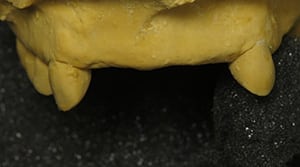 |
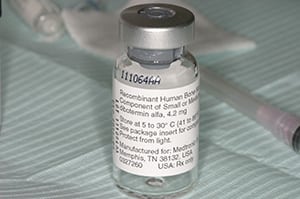 |
|
| Julie came to see Dr. Thein wanting to replace her missing upper front teeth with dental implants. They were removed when she was a teenager and it affected her.” | Dr. Thein listened to her concerns and gave her various options. Julie elected to use a growth factor (BMP in bottle) to thicken her very thin front bone (1/8”) | |
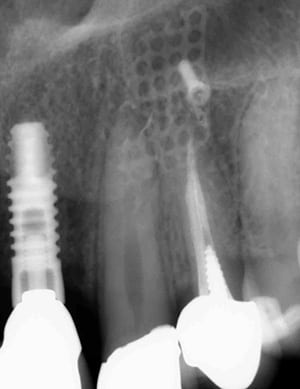 |
||
| With the new thicker bone, Dr. Thein was able to place implants for Julie. | ||
After |
||
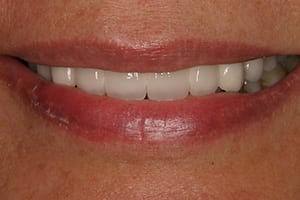 |
||
| With the implants in placed, we created a beautiful smile for Julie. “I absolutely love my new smile and I can really chew. You guys are awesome!” – Julie |
||
How This Type of Implant Case Is Evaluated
The diagnostic process considers maintainable teeth, bone, implant positions, restorative space, bite, hygiene access and final tooth arrangement.
Evaluate the teeth, gums, bite and treatment area before deciding whether implant treatment is appropriate.
Assess supporting anatomy and the space required for the planned implant-supported restoration.
Implant position should support the intended restoration, bite and long-term hygiene access.
Implant care includes professional follow-up, home care and maintenance of the final restoration.
How Implant Placement and the Final Restoration Work Together
The published case is presented as a complete dental implant reconstruction requiring coordinated implant surgery and restorative treatment.
Dr. Robert Thein personally manages implant planning, surgical placement and final implant restoration at Boston Dental Care. This allows the surgical and restorative phases to be coordinated within one treatment plan.
Complete Dental Implant Reconstruction: Key Clinical Takeaway
Complex reconstruction is not simply about placing multiple implants; surgical positions must support a maintainable and functional restorative design.
Case studies demonstrate treatment possibilities rather than guaranteed results. Bone, gums, remaining teeth, bite, health and restorative needs vary for every patient.
Discuss a Similar Implant Problem With Dr. Robert Thein
Boston Dental Care is located at 3730 Foothill Blvd in La Crescenta, California. Dr. Robert Thein provides implant-focused surgical and restorative care for patients from La Crescenta, Glendale, Montrose, Pasadena, Burbank, La Cañada, Sunland, Tujunga, Eagle Rock and nearby communities.
Frequently Asked Questions
What makes an implant case a complete reconstruction?
It generally involves several areas requiring coordinated surgical and restorative treatment rather than one isolated tooth.
Are all remaining teeth automatically removed?
No. Each tooth should be evaluated for prognosis, function and maintainability.
Why is restorative planning done before surgery?
Intended final tooth positions help determine where implants should ideally be placed.
Can reconstruction be completed in phases?
Yes. Complex cases are often phased according to priorities, healing and sequencing.
What imaging may be used?
Appropriate dental imaging, including 3D imaging when indicated, can help evaluate bone and anatomy.
What happens after final restorations are placed?
Long-term follow-up includes hygiene, bite checks, implant monitoring and maintenance.
Request an Individual Implant Evaluation
Bring your X-rays, previous treatment plan or implant records if available. Dr. Robert Thein can evaluate your current condition and discuss appropriate options.