Plenty of people live with a missing tooth for years. It might have come out after a bad cavity, a sports injury, or an extraction you meant to follow up on and never did. The gap doesn’t hurt, nobody comments on it, and you’ve learned to chew on the other side. Life goes on.
But a gap isn’t as harmless as it feels. Your teeth, gums, and jaw all depend on each other, and when one tooth disappears, the rest of your mouth starts adjusting to the loss, usually in ways you won’t like. If you’ve been putting off a dental implant in Glendale or any other kind of missing tooth replacement, it helps to know what’s going on behind the scenes.
Your jawbone slowly shrinks
This is the one most people have never heard of. A tooth root does a job you’d never think about: every time you bite down, it passes a little pressure into the jawbone, and that pressure tells your body the bone is still needed. Remove the root and the message stops. Your body then starts pulling minerals out of that spot and putting them to use elsewhere.
Bone loss after tooth loss moves fastest during the first year, though it never really stops. The ridge gets narrower and lower. Years later, when someone finally decides to fix the gap, there may not be enough bone to hold an implant, and a graft becomes part of the plan. That means more time, more cost, and a longer recovery than if the tooth had been replaced earlier.
The teeth around the gap start to move
Teeth aren’t fixed in place the way they look. They shift constantly in tiny amounts, and they stay put mostly because their neighbors hold them there. Take one away and the teeth on either side begin to lean toward the empty space. The tooth directly above or below the gap can also creep out of its socket, because nothing is meeting it when you bite.
A common story goes like this. Someone loses a back molar at 35. By 40, the molar next to it has tilted forward, food packs into the new angles, and the bite feels slightly off. Now the dentist has to straighten things out before a replacement tooth can even go in. One simple problem has become two.
Eating gets harder than you realize
Nobody announces “I’ve changed how I eat.” It just happens. You start chewing on the good side, skipping the tough steak, and cutting apples into slices. After a while, that one side of your mouth is doing double duty and the other is barely used.
All that uneven pressure adds up. Some people end up with sore jaw muscles, morning headaches, or clicking in the jaw joint. The teeth on the working side also wear down faster than they should.
Cavities and gum disease become more likely
A gap, plus teeth that have shifted, creates spots that are really hard to clean. Floss can’t always get in there and a toothbrush definitely can’t. Plaque settles in, and over time that can mean decay or gum infection around the teeth next to the space. Lose one of those and the cycle starts over. This is how one missing tooth turns into two or three.
Your face can look different
When the jawbone loses volume, the support for your lips and cheeks goes with it. The lower half of the face can start to look collapsed, and lines around the mouth get deeper. With a single missing tooth this is subtle. With several, people often look older than they are.
There’s also the simple matter of confidence. Some people stop smiling in photos, cover their mouth when they laugh, or avoid certain conversations altogether. That’s reason enough to deal with it.
Speech can change too
Front teeth help shape sounds like “s,” “f,” and “th.” If one of them is missing, you might notice a whistle or a slight lisp. It’s usually mild, but it bothers people who talk for a living.
Tooth replacement options
You have a few ways to fill the space, and each has trade-offs.
A bridge anchors a replacement tooth to the teeth beside the gap. It’s fairly fast, but those neighboring teeth have to be filed down to hold the crowns, and the bone underneath the gap still shrinks.
Partial dentures cost less at the start and can be taken out for cleaning. They also move around, sometimes need relining, and do nothing for the bone.
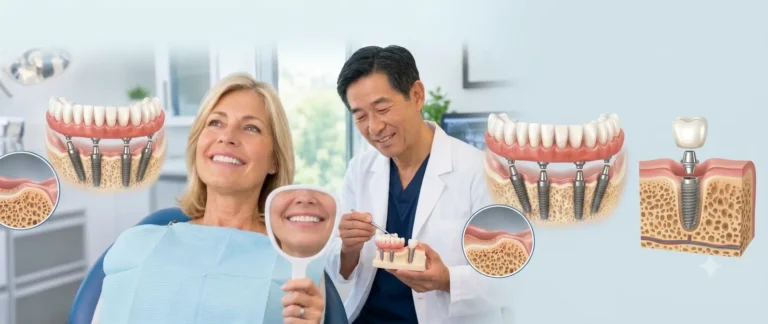
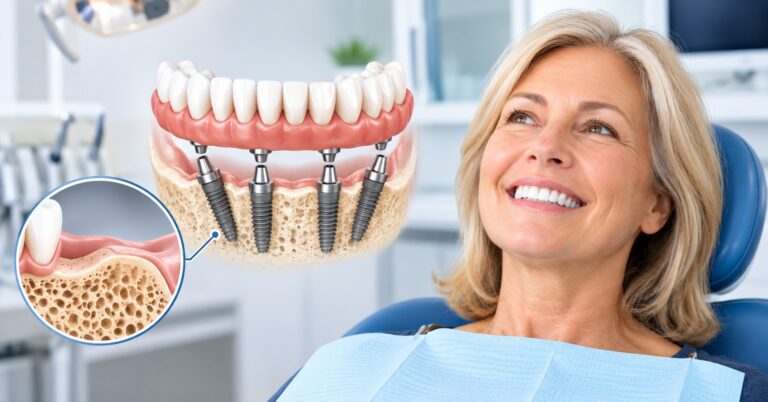
Dental implants take a different approach. A small titanium post goes into the jaw where the root used to be, and a custom crown attaches on top. Since the post sits in the bone, it gives the jaw the same kind of stimulation a real root would, which is why implants are the only option that helps preserve bone.
When people compare a dental bridge vs implant, cost is usually the first thing they ask about, and a bridge often wins on price at first. Over the long run, though, bridges tend to need replacing after 10 to 15 years, while an implant can last far longer with decent care.
Why so many people choose implants
A single tooth implant is the closest thing to getting your own tooth back. You brush it like any other tooth, floss around it, and bite into whatever you like. Nothing needs to be removed at night, and the teeth beside it stay untouched.
For people missing most or all of their teeth, full mouth dental implants use a handful of posts to support a full set of teeth that stay firmly in place. Anyone who has fought with loose dentures knows why that matters.
What to look for in an implant dentist
Before any treatment, you should get a proper exam, with X-rays or a 3D scan to check bone levels. The dentist should explain your options in plain language, including the cases where an implant isn’t the right call. Ask how many implants they place, what the timeline looks like, and what happens if you need a graft.
If you’re looking for an implant dentist in Glendale, Dr. Robert Thein is a board-certified implant surgeon whose La Crescenta practice serves Glendale and nearby communities. His approach starts with a careful look at your bone health, bite, and the final restoration before any treatment is recommended.
Patients exploring dental implants in Glendale CA get a plan built around their own situation. Even if your gap has been there for years, it’s worth getting evaluated, because there are often ways to rebuild what’s been lost.
Don’t let it sit
A missing tooth won’t heal itself, and waiting rarely makes the fix easier. The sooner it’s replaced, the more bone you keep and the simpler the treatment tends to be. When you’re ready to talk through your options, you can book a consultation and find out what a dental implant in Glendale would look like for you.
Frequently Asked Questions
Do I really need to replace a missing tooth?
In most cases, yes. A missing tooth can cause bone loss, shifting teeth, bite problems, and more decay over time, even when the gap doesn’t bother you day to day.
How long can I wait before getting an implant?
There’s no hard deadline, but earlier is easier. Bone loss is fastest in the first year. If you’ve waited longer, you may still be a candidate, though you might need bone grafting first.
Is the implant procedure painful?
Most patients say it’s easier than expected. The area is numbed, and if you’re anxious, sedation options can make the visit more comfortable. Soreness afterward is usually handled with over-the-counter medication and a couple of quiet days.
How long do dental implants last?
The titanium post can last decades, and often a lifetime, with good brushing, flossing, and regular implant maintenance. The crown on top may need replacing eventually because of normal wear.
Are implants better than bridges or dentures?
For many people, yes, mostly because they preserve bone and don’t depend on other teeth. The right choice still depends on your health, budget, and goals, so an exam is the best way to decide.
How much does a dental implant cost in Glendale?
It depends on how many teeth are being replaced, whether you need a graft, and the type of restoration. You can read about the cost of dental implants here, and a consultation gives you a real number for your case.
Am I a good candidate for an implant?
Most healthy adults with enough jawbone are. Gum disease, smoking, and poorly controlled diabetes can affect the outcome, so these usually need to be addressed first. See the candidate guide for more detail.
How long does the whole process take?
Some people finish in a few months. If a graft is needed, healing takes longer. Your dentist will map out the timeline after your exam.