You know the moment. You’re out near the Americana, someone says something funny, you start to laugh, and halfway through you remember the gap and clamp your mouth shut.
It’s a common story. One person chews on the left side for two years. Another quietly stops ordering corn on the cob. A third gets very, very good at the closed-lip photo smile.
Whatever your version looks like, missing tooth replacement in Glendale comes down to a handful of real choices, and none of them is wrong by default. They just suit different people. So here’s each one in plain English, annoying parts included.
Why You Shouldn’t Just Wait It Out
Nobody enjoys booking a dental appointment, and I’m not going to pretend otherwise. But a gap isn’t like a chipped nail. It keeps changing things the whole time you ignore it.
What’s Going On Under the Gum
A tooth root does more than hold the tooth in place. Every time you bite, it sends small pressure signals into the jawbone, and the bone responds by staying dense. Lose the root and the signal stops. The bone in that spot slowly thins out, which dentists call resorption.
Meanwhile, the teeth next door start tilting toward the space, and the tooth above or below can drift in search of something to bite against. None of this is dramatic from one week to the next. Give it a few years, though, and it adds up, which can make the eventual fix harder. The old proverb applies: a stitch in time saves nine.
The Stuff You Notice Every Day
Chewing on one side wears that side out. A front gap can nudge sounds like “s” and “th” slightly off. And then there’s the smile, which is hard to put a number on, but plenty of people feel it every time a camera comes out.
Five Ways to Replace a Missing Tooth
I’ve listed these from most permanent to most temporary. Don’t read that as best to worst, though. Your bone, your gums, your schedule and your budget all get a vote.
1. Single Tooth Dental Implants
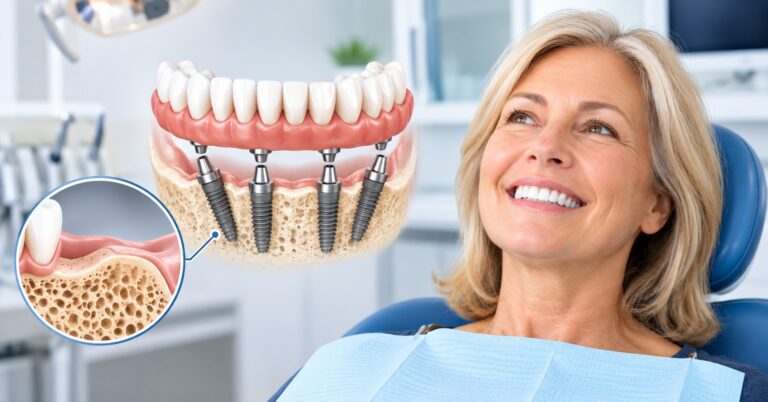
An implant is a small titanium post set into your jawbone, and it works as a brand-new root. Once the bone has grown onto it, a custom crown goes on top. If you’ve been googling dental implants Glendale offices provide, this is probably the option you kept running into.
What’s Good About It
Your neighboring teeth stay completely alone: no filing, no crowns. It looks and feels the closest to the real thing. And because the post sits in bone, that bone keeps getting a job to do. Plenty of implants last for decades.
What’s Not So Good
Time, mostly. Between healing and the final crown you’re looking at months, not weeks. It’s usually the biggest bill up front, too. You also need enough bone to anchor it, so some people need a graft first, and smoking or poorly controlled diabetes can raise the odds of trouble. Your dentist will check all of that before anyone picks up a drill.
2. Traditional Fixed Bridge
A bridge is a false tooth fused between two crowns, which cap the teeth on either side of the gap. It’s fast, often two visits, and it feels solid.
The catch is that those two neighbors get shaved down, even when they’re perfectly healthy. That’s a fair trade if they already have big fillings or crowns. It’s a harder sell if they don’t. And the bone under the false tooth gets no stimulation, so it can keep thinning.
3. Maryland Bridge
This one uses a small framework with “wings” bonded to the backs of the neighboring teeth, so almost nothing gets removed. It suits front teeth in a lighter bite. The wings can pop loose over time, so most dentists treat it as a mid-term fix rather than a forever one.
4. Removable Partial Denture
Think pink acrylic base, a few replacement teeth, and little clasps that grip nearby teeth. No surgery, a lower price tag, and it can fill several gaps at once. On the flip side, you take it out to clean it, the first few weeks feel strange, and sticky foods can make it shift.
5. Flipper
A flipper is a lightweight acrylic tooth on a thin plate. It’s the stopgap: handy after an extraction while an implant site heals. It’s cheap and quick. It’s also not built for steak.
Side by Side
| Option | Approx. lifespan* | Best for | Main trade-off |
| Single tooth implant | 20–30 years | Long-term, natural feel | Higher cost, longer timeline |
| Fixed bridge | 10–14 years | Getting it done faster | Alters neighboring teeth |
| Maryland bridge | 5–9 years | Front teeth, minimal prep | Wings can loosen |
| Partial denture | 5–9 years | Tight budget, several gaps | Removable, bulkier feel |
| Flipper | 2–4 years | Short-term placeholder | Not durable |
*General, illustrative estimates. Real numbers depend on hygiene, bite forces and overall health.
Picking the One That Fits
Forget “best” for a minute and ask what you’re actually trying to protect. Your time? Your money? Your healthy neighbouring teeth? Your answer usually points somewhere pretty fast.
Questions Worth Bringing to Your Appointment
Write these on your phone before you go. Appointments have a way of making you forget everything.
- Is there enough bone for an implant, or would I need a graft?
- How healthy are the teeth on either side of the gap?
- What does the timeline look like from the first visit to the final tooth?
- What’s the total cost, and what will my insurance cover?
- What upkeep should I expect over the next ten years?
What to Look for in a Glendale Dentist
Ask whether they use 3D imaging before placing implants. Ask to see real cases of single tooth dental implants, not stock photos. And listen closely for whether they bring up options they don’t offer themselves. If every answer ends with the same product, keep shopping. Local reviews that mention specifics, like how a dentist explained things or handled a nervous patient, tell you more than a bare star rating.
The Bottom Line
A missing tooth isn’t just a cosmetic thing. It changes how you eat and talk, and over the years it can reshape the bone and bite underneath.
The good news? You’ve got options. Implants last the longest and feel the most natural. Bridges are quicker. Partial dentures cost less. Flippers hold the fort while you decide.
Pick the one that fits your health and your goals, then book a consultation with a Glendale dentist and bring your list. That first appointment is mostly just a conversation.
Frequently Asked Questions
How long does a single tooth dental implant take?
Usually three to six months from placement to the final crown, longer if you need a bone graft first.
Does getting an implant hurt?
You’ll have local anesthesia, so the procedure itself shouldn’t. Afterward, most people feel mild to moderate soreness that over-the-counter pain relief handles.
What happens if I just leave the gap?
Neighboring teeth can drift, the opposing tooth can creep down, and the jawbone in that spot can slowly shrink.
Which option costs the least?
Flippers and partial dentures usually cost the least up front. Implants cost more now but can work out cheaper over decades.
Will my dental insurance help?
It depends on your plan. Many cover part of a bridge or denture, and some cover implants. Ask the office for a pre-treatment estimate in writing.
Am I too old for an implant?
Age on its own isn’t the issue. General health and bone quality matter far more.
How do I look after a replacement tooth?
Brush twice a day, clean between the teeth daily, and keep your checkups. Implants and bridges need the same care as natural teeth.
Ready to talk through your options? Book a consultation with a Glendale dentist and ask about missing tooth replacement.