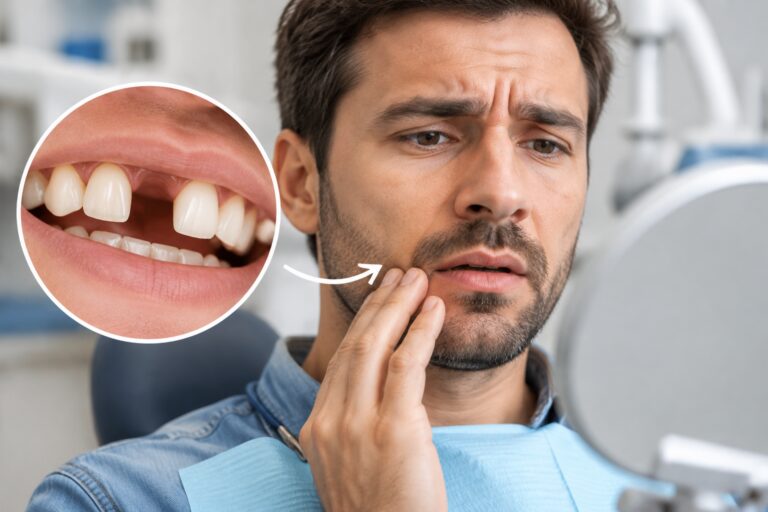
You’re halfway through a meal when your denture shifts. Again. Or maybe your natural teeth are so worn, loose or infected that every bite feels like a negotiation. If that’s you, you’re not out of options. Full arch implant restorations replace an entire row of teeth with a fixed, implant-supported bridge that stays put. No adhesive. No clicking. No guessing. This guide covers what they are, how they work, who they suit and what to ask before you commit.
What Full Arch Implant Restorations Actually Are
Let’s strip away the jargon first. Once the basic idea lands, everything else in this guide falls into place.
One Arch, One Bridge
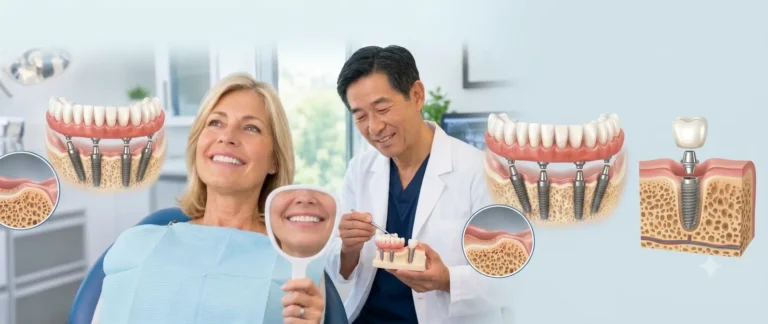
Your upper or lower jaw is an “arch.” A full arch restoration replaces every tooth in that arch with a single custom-made prosthesis, anchored to dental implants, usually four to six. You can treat one arch or both.
Why a Few Implants Can Carry a Full Set
Think of a suspension bridge. It doesn’t need a pillar under every metre of road. A few well-placed towers carry the load. Implants work the same way. Titanium posts are placed in the strongest parts of your jaw, sometimes at an angle, and fuse with the bone through a process called osseointegration. That fusion becomes the foundation your new teeth sit on.
Names You’ll Hear
You’ll run into All-on-4 (a trademarked name from Nobel Biocare), All-on-6, “teeth in a day,” hybrid prosthesis and fixed implant bridge. The labels differ. The principle doesn’t: a few implants, one fixed set of teeth.
Who Makes a Good Candidate?
Not everyone walks in ready for surgery, and that’s fine. Candidacy depends on bone, gum health and general health. Age alone rarely decides it.
Signs You May Be a Fit
You may be a good candidate if you’re missing most of your teeth, or your remaining teeth can’t be saved because of advanced gum disease, decay or fractures. It also helps if you’re tired of dentures that move, and you’re willing to keep up with daily cleaning and regular checkups.
What If You’ve Lost Bone?
After tooth loss, the jawbone gradually shrinks, much like a footprint filling in. Many people with bone loss still qualify, because angled implants can use denser bone. Some need bone grafting, or longer implants anchored in the cheekbone (zygomatic implants) for the upper jaw. A 3D CBCT scan shows what’s realistic for you.
Factors That Raise Risk
Smoking, uncontrolled diabetes, untreated gum infection and heavy teeth grinding can all affect healing and longevity. They aren’t automatic dealbreakers, but your dentist will want them managed first.
The Treatment Journey
Knowing the roadmap takes most of the fear out of it. Here’s the typical sequence, though your clinician will tailor it to you.
Consultation and Planning
Expect an oral exam, X-rays, a 3D scan and digital impressions. Your dentist will plan implant positions, decide which teeth need extracting and talk through sedation. Ask to see the plan. A good clinician is happy to show it.
Surgery Day
Failing teeth are removed if needed, and the implants are placed, usually under sedation or anesthesia. Many clinics fit a temporary bridge the same day or within a few days. That’s the “teeth in a day” idea. It’s a functional, good-looking stopgap, but your jaw isn’t ready for full chewing power yet.
Healing and Final Teeth
Over roughly three to six months, the implants integrate with your bone. Then the final bridge is made, often from zirconia or reinforced acrylic. Timelines vary, so treat any figure as a ballpark.
Materials and Design Options
Two big choices shape how your restoration looks, feels and lasts. Your dentist should walk you through both.
Zirconia vs. Acrylic
Zirconia is strong, stain-resistant and lifelike, though it’s often pricier. Acrylic is lighter, easier to repair and kinder on a temporary bridge, but it can wear faster. Neither is “best” for everyone. It depends on your bite, budget and habits.
All-on-4 vs. All-on-6
Four implants mean less surgery and often lower cost. Six spread the biting load across more anchors, which can suit softer bone or a stronger bite. The right number comes from your scan, not a sales pitch.
Full Arch Implants vs. Dentures
Dentures have helped millions of people. But you probably know the trade-offs already.
Where Each Option Wins
Dentures rest on your gums. They can slip, rub and loosen as your bone shrinks. Full arch implants are fixed, need no adhesive and stimulate the jawbone much like natural roots, which helps with biting strength and confidence. The trade-offs are higher upfront cost, surgery and a longer process. As Phyllis Diller put it, “A smile is a curve that sets everything straight.” A stable one tends to do that too.
What Does It Cost?
Ask five clinics and you’ll get five quotes. That’s normal, but it’s worth understanding why.
What Drives the Price
The number of implants, the material, bone grafting, sedation, lab quality, the clinician’s experience and whether you’re treating one arch or both all move the total. The cheapest quote isn’t always the best value. Ask what’s included: scans, temporary teeth, the final bridge, follow-ups and any warranty. Many clinics offer financing or EMI plans.
Recovery, Care and Longevity
Surgery is the start. How you look after your implants decides how long they last.
The First Weeks
Expect some swelling and tenderness. Stick to soft foods while the implants heal, and follow your dentist’s instructions closely.
Daily Care
Brush twice a day, and add a water flosser or interdental brushes under the bridge. Book professional cleanings. If you grind your teeth, ask about a night guard.
How Long Will It Last?
The implants themselves can last decades with good care, and studies report high survival rates in well-selected patients. The bridge, though, may need repair or replacement over time. It’s like tyres on a car: the chassis stays, the wear parts don’t.
Risks Worth Knowing
A trustworthy guide doesn’t skip this part.
What Can Go Wrong
Possible issues include infection, gum inflammation around implants (peri-implantitis), implant failure, a chipped or fractured prosthesis and a short speech adjustment period. An experienced team and consistent follow-ups lower these risks considerably.
Conclusion
Full arch implant restorations aren’t a magic wand, but for the right patient they come close. They replace failing teeth or loose dentures with a fixed, natural-feeling set that lets you eat, speak and smile without second-guessing. The key is a thorough scan-based plan, a clear cost breakdown and an experienced clinician. Book a consultation, bring your questions and decide with the full picture in front of you.
FAQs
Are full arch implants painful?
Surgery is done under sedation or anesthesia, so you shouldn’t feel it. Afterwards, soreness is usually manageable with prescribed medication.
Can I get new teeth on the same day?
Often yes, as a temporary bridge. The final teeth come after healing.
How many implants do I need per arch?
Typically four to six, depending on your bone and bite.
Can I get full arch implants with bone loss?
Frequently, using angled implants, bone grafts or zygomatic implants. A 3D scan confirms it.
How long do they last?
The implants can last for decades with good care, while the bridge may need maintenance or replacement sooner.
Can I eat normally afterwards?
After the healing period, most people eat a wide range of foods. Start with soft foods early on.
Is a full arch restoration better than dentures?
For many patients it feels more stable and natural, though it costs more upfront. Your dentist can help you weigh both.