Tooth loss can affect much more than your appearance. Missing teeth can make eating difficult, change the way you speak, cause surrounding teeth to shift, and even lead to bone loss in your jaw. Fortunately, modern dental implants in Burbank offer a permanent, natural-looking solution that restores both function and confidence.
Whether you’ve lost one tooth due to an accident or need a full-mouth restoration, dental implants remain the gold standard in tooth replacement because they closely mimic the strength and appearance of natural teeth. With proper planning and expert placement, dental implants have a very high long-term success rate.
If you’re searching for an experienced implant provider serving patients near Burbank, California Implant Dentist provides advanced implant dentistry with personalized treatment plans designed to deliver long-lasting results.
Also Read – How Much Do Dental Implants Cost in the USA? (2026 Guide)
What Are Dental Implants?
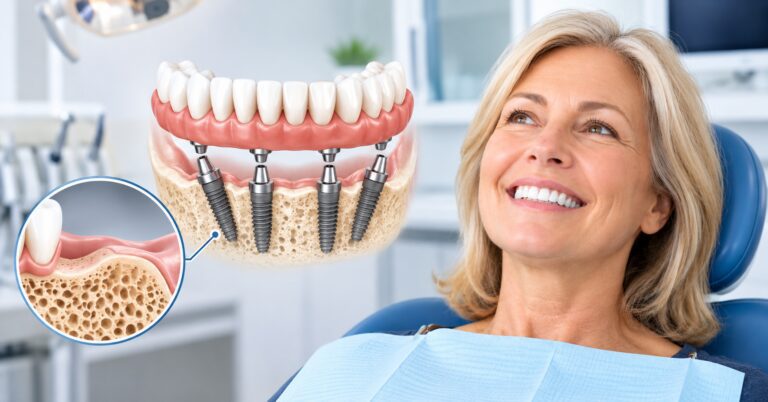
Dental implants are titanium posts that are surgically placed into the jawbone to replace missing tooth roots. After the implant integrates with your bone through a natural healing process called osseointegration, a custom-made crown, bridge, or denture is attached.
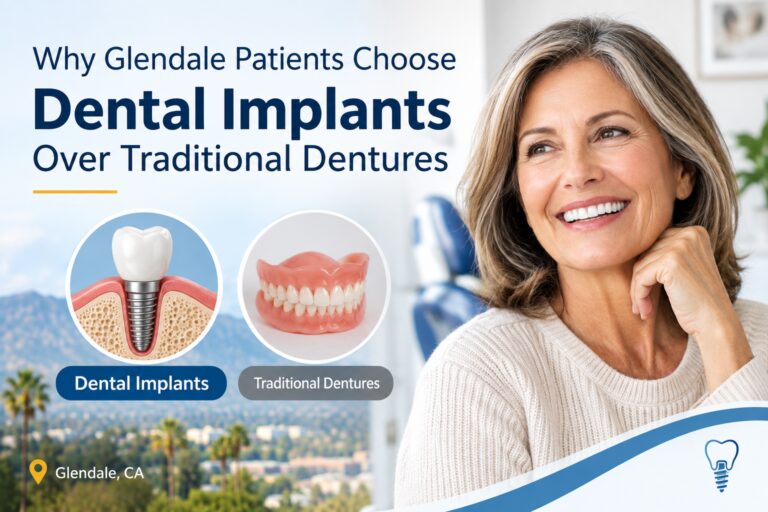
Unlike traditional bridges or removable dentures, dental implants:
- Look like natural teeth
- Feel comfortable
- Preserve jawbone health
- Restore chewing ability
- Can last for decades with proper care
Because implants fuse directly with the jawbone, they provide stability that other tooth replacement options cannot match.
Why More Patients Near Burbank Choose Dental Implants
Dental implants have become increasingly popular because they solve both cosmetic and functional problems.
Some of the biggest benefits include:
Natural Appearance
Each restoration is custom-designed to match your existing teeth in color, shape, and size.
Improved Chewing Ability
Unlike removable dentures, implants allow you to comfortably eat steak, apples, nuts, and other foods.
Long-Term Durability
With proper oral hygiene and regular dental visits, implants can last many years and often decades.
Prevent Bone Loss
When a tooth is missing, the jawbone begins shrinking over time. Dental implants stimulate the bone similarly to natural tooth roots, helping preserve facial structure.
Better Speech
Loose dentures may slip while talking. Dental implants stay securely in place.
Who Is a Good Candidate for Dental Implants?
Most healthy adults qualify for implant treatment.
You may be an excellent candidate if you:
- Have one or more missing teeth
- Have healthy gums
- Have adequate jawbone density
- Don’t smoke heavily
- Practice good oral hygiene
- Are looking for a permanent tooth replacement
Even patients who have experienced bone loss may still qualify after a bone graft or other advanced procedures.
Types of Dental Implants Available
Single Tooth Implant
Perfect when only one tooth is missing.
A single implant replaces the root while a custom crown restores the visible portion of the tooth without affecting neighboring healthy teeth.
Multiple Dental Implants
Several missing teeth can often be replaced using strategically placed implants supporting bridges instead of replacing every individual tooth.
Full Mouth Dental Implants
Patients missing all upper or lower teeth may benefit from full-mouth implant restorations.
These provide:
- Strong bite force
- Improved comfort
- Greater confidence
- Better facial support
All-on-4 Dental Implants
All-on-4 uses four strategically positioned implants to support a full arch of replacement teeth.
Benefits include:
- Fewer implants required
- Faster treatment
- Stable full-arch restoration
- Reduced need for extensive bone grafting in many cases
What Is the Dental Implant Process?
Every patient receives a customized treatment plan, but the process generally includes:
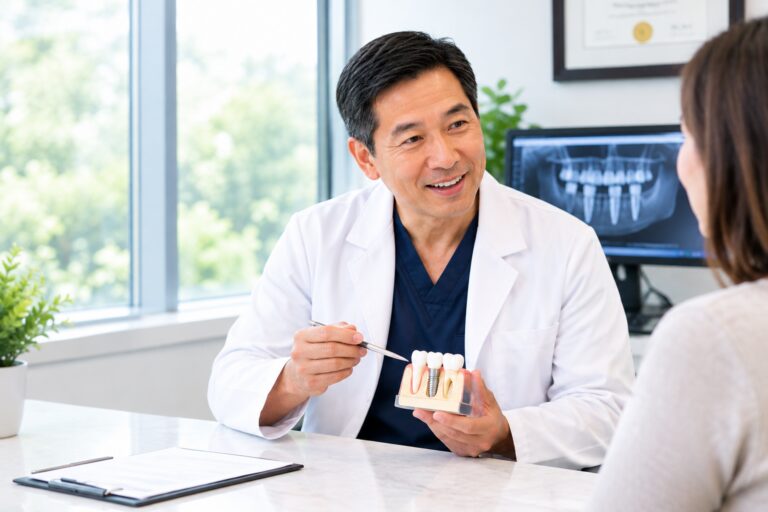
1. Comprehensive Consultation
Your dentist evaluates:
- Oral health
- Gum condition
- Bone density
- Medical history
Digital imaging and 3D scans help determine the ideal implant placement.
2. Implant Placement
The titanium implant is placed into the jawbone using precise surgical techniques.
Most patients report that implant surgery is easier than expected.
3. Healing Period
Over the next several months, the implant naturally bonds with your jawbone.
This creates an extremely strong foundation.
4. Final Restoration
Once healing is complete, your custom-made crown, bridge, or denture is attached.
The final result looks and functions like a natural tooth.
How Much Do Dental Implants Cost Near Burbank?
The cost depends on several factors:
- Number of implants
- Bone grafting requirements
- Type of restoration
- Implant materials
- Complexity of treatment
During your consultation, you’ll receive a personalized treatment plan with transparent pricing and financing options.
Remember that dental implants often provide greater long-term value than bridges or dentures because they typically require fewer replacements over time.
Why Experience Matters in Implant Dentistry
Dental implant success depends heavily on:
- Accurate diagnosis
- Proper treatment planning
- Surgical precision
- High-quality materials
- Ongoing maintenance
Choosing an experienced implant dentist helps reduce complications and improves long-term outcomes. Implant success rates are consistently high when performed by qualified clinicians using appropriate planning and follow-up care.
Caring for Your Dental Implants
Maintaining implants is similar to caring for natural teeth.
Daily care includes:
- Brushing twice daily
- Flossing around implants
- Using antimicrobial mouthwash if recommended
- Visiting your dentist for regular cleanings
- Avoiding tobacco products
Good oral hygiene significantly contributes to implant longevity.
Frequently Asked Questions
How long do dental implants last?
With proper care, many dental implants can last 20 years or longer, and some last a lifetime.
Are dental implants painful?
The procedure is performed under local anesthesia or sedation when appropriate. Most patients experience only mild discomfort during recovery.
How long does treatment take?
Treatment varies depending on your oral health. Simple cases may be completed in several months, while bone grafting can extend the timeline.
Can smokers get dental implants?
Smoking increases the risk of implant failure. Your dentist may recommend quitting before treatment to improve success.
What if I have bone loss?
Bone grafting or advanced implant techniques may make implants possible even when bone volume is limited.