Dental implants are one of the most reliable solutions for replacing missing teeth, providing a natural-looking and long-lasting alternative to bridges and dentures. However, successful dental implant placement requires a strong and healthy jawbone to support the implant.
When a patient has insufficient bone density due to tooth loss, gum disease, injury, or other factors, bone grafting for dental implants may be recommended. This procedure helps rebuild the jawbone, creating a stable foundation for dental implants and improving long-term treatment success.
At California Implant Dentist, we help patients understand their options and determine whether bone grafting is needed before starting their dental implant journey.
Also Read – Are Same Day Dental Implants Worth the Investment?
What Is Bone Grafting for Dental Implants?
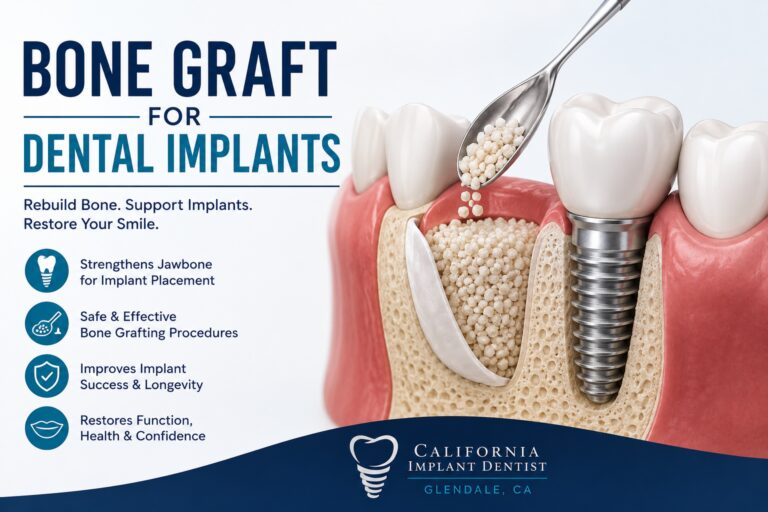
Dental bone grafting is a procedure that restores lost bone in areas where a dental implant will be placed. The graft material acts as a framework that encourages your body to grow new bone tissue.
After healing, the strengthened jawbone can better support a dental implant, helping create a secure and stable tooth replacement.
Bone grafting may be needed for patients who have experienced:
- Long-term tooth loss
- Jawbone deterioration
- Advanced gum disease
- Facial trauma or injury
- Bone loss after tooth extraction
- Naturally thin jawbone structure
Why Is Bone Grafting Needed Before Dental Implants?
A dental implant is placed directly into the jawbone, where it integrates through a process called osseointegration. This process requires enough healthy bone volume and density.
Without adequate bone support, implants may:
- Lack stability
- Fail to properly integrate
- Affect chewing function
- Have a higher risk of complications
Bone grafting strengthens the jaw and improves the chances of achieving a successful dental implant outcome.
Also Read – Are Mini Dental Implants Right for You?
Who Needs Bone Grafting for Dental Implants?
Not every dental implant patient requires bone grafting. Your dentist will evaluate your jawbone using advanced imaging, such as digital X-rays or 3D scans, to determine whether additional bone support is necessary.
You may need bone grafting if you have:
1. Bone Loss After Missing Teeth
When a tooth is missing, the jawbone no longer receives stimulation from tooth roots. Over time, this can cause bone shrinkage.
2. Tooth Extraction-Related Bone Loss
Some patients experience bone loss after tooth removal, making it difficult to immediately place an implant.
3. Gum Disease
Advanced periodontal disease can damage the bone supporting your teeth, reducing available implant support.
4. Naturally Thin Jawbone
Some patients naturally have insufficient bone thickness or height for implant placement.
Types of Bone Grafting Procedures for Dental Implants
The type of bone graft recommended depends on the location and amount of bone loss.
1. Socket Preservation
Socket preservation is performed immediately after tooth extraction to prevent bone loss and maintain the shape of the jaw.
Benefits include:
- Preserving jawbone structure
- Preparing the area for future implants
- Supporting better cosmetic results
2. Ridge Augmentation
A ridge augmentation rebuilds areas where the jawbone has become too narrow or damaged.
This procedure helps create enough bone width for secure implant placement.
3. Sinus Lift
A sinus lift is commonly performed for upper back teeth when the sinus cavity is too close to the jawbone.
The procedure gently lifts the sinus membrane and adds bone material underneath to create space for dental implants.
4. Bone Expansion
Bone expansion techniques widen narrow areas of the jawbone to provide enough room for implant placement.
What Materials Are Used for Dental Bone Grafts?
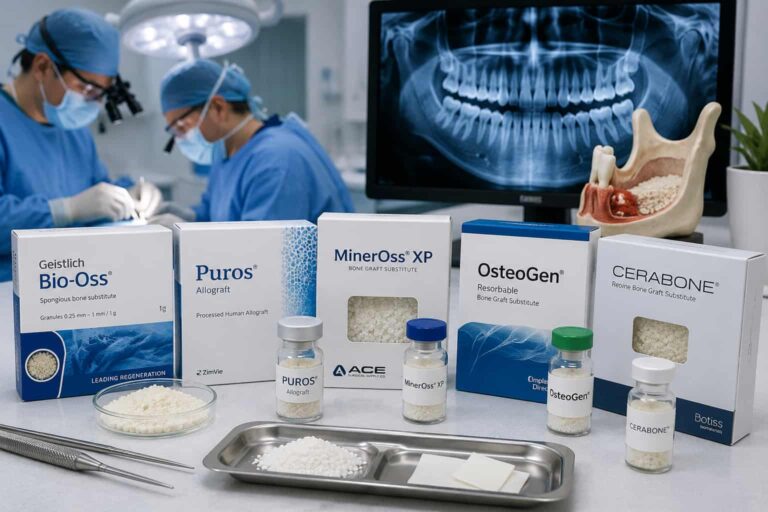
Several types of graft materials may be used depending on your needs:
Autograft
Bone is taken from another area of your own body.
Allograft
Bone material is obtained from a human donor source and processed for safety.
Xenograft
Bone material comes from an animal source, commonly bovine bone.
Synthetic Grafts
Artificial materials are designed to encourage new bone growth.
Your implant dentist will recommend the best option based on your treatment plan.
Bone Grafting Procedure: Step-by-Step
Step 1: Consultation and Evaluation
Your dentist will examine your oral health and use imaging technology to assess bone volume.
Step 2: Preparation
Local anesthesia or sedation options may be provided to ensure comfort during the procedure.
Step 3: Placement of Bone Graft Material
The dentist places graft material in the area requiring additional support.
Step 4: Healing Period
Over the next several months, your body gradually develops new bone around the graft material.
Step 5: Dental Implant Placement
Once sufficient bone healing occurs, the dental implant can be placed securely.
How Long Does Bone Grafting Take to Heal?
Healing time varies depending on:
- Amount of bone needed
- Location of the graft
- Type of graft material used
- Individual healing ability
Most patients require approximately 3 to 6 months for the graft to fully integrate before dental implant placement.
Your dentist will monitor healing progress and determine the right time for implant surgery.
How Much Does Bone Grafting for Dental Implants Cost?
The cost of dental bone grafting depends on several factors, including:
- Type of bone graft procedure
- Amount of bone restoration needed
- Materials used
- Complexity of treatment
- Additional procedures required
During your consultation, your implant dentist can provide a personalized cost estimate based on your specific needs.
Also Read – Dental Implants Near Me
Is Bone Grafting Painful?
Most patients report minimal discomfort during bone grafting because the procedure is performed using local anesthesia and modern techniques.
After treatment, you may experience:
- Mild swelling
- Tenderness
- Minor discomfort
Following your dentist’s aftercare instructions can help ensure a smoother recovery.
Benefits of Bone Grafting Before Dental Implants
Bone grafting can provide several advantages, including:
✅ Creates a strong foundation for dental implants
✅ Improves implant stability
✅ Restores lost jawbone structure
✅ Enhances facial appearance after bone loss
✅ Increases treatment options for patients with insufficient bone
How to Care for Your Mouth After Bone Grafting
After your procedure:
- Follow all post-treatment instructions
- Avoid smoking and tobacco products
- Maintain good oral hygiene
- Eat soft foods during initial healing
- Avoid pressure on the surgical area
- Attend follow-up appointments
Proper care can support successful bone regeneration and implant preparation.
Can You Get Dental Implants Without Bone Grafting?
Some patients with minor bone loss may still qualify for dental implants without grafting. Alternative options may include:
- Short dental implants
- Specialized implant techniques
- Implant placement in available bone areas
A comprehensive evaluation is the best way to determine the right treatment approach.
Frequently Asked Questions About Bone Grafting for Dental Implants
How long after bone grafting can I get dental implants?
Most patients receive dental implants after 3–6 months of healing, depending on bone development.
Is bone grafting necessary for all dental implants?
No. Bone grafting is only needed when there is insufficient jawbone support.
How successful is dental bone grafting?
Dental bone grafting has a high success rate when performed by an experienced implant dentist and followed by proper aftercare.
Can older adults get bone grafting for implants?
Yes. Age alone does not prevent patients from receiving bone grafting or dental implants. Overall health and bone condition are more important factors.