Choosing the right dental implant clinic is an important decision. Dental implants are designed to replace missing teeth and restore your ability to eat, speak, and smile comfortably. Because implant treatment involves surgery as well as restorative dentistry, the experience of the dentist and the quality of treatment planning can make a significant difference.
If you are comparing dental implant clinics, don’t choose a practice based only on price or online reviews. Consider the dentist’s implant experience, qualifications, treatment approach, technology, communication, and follow-up care.
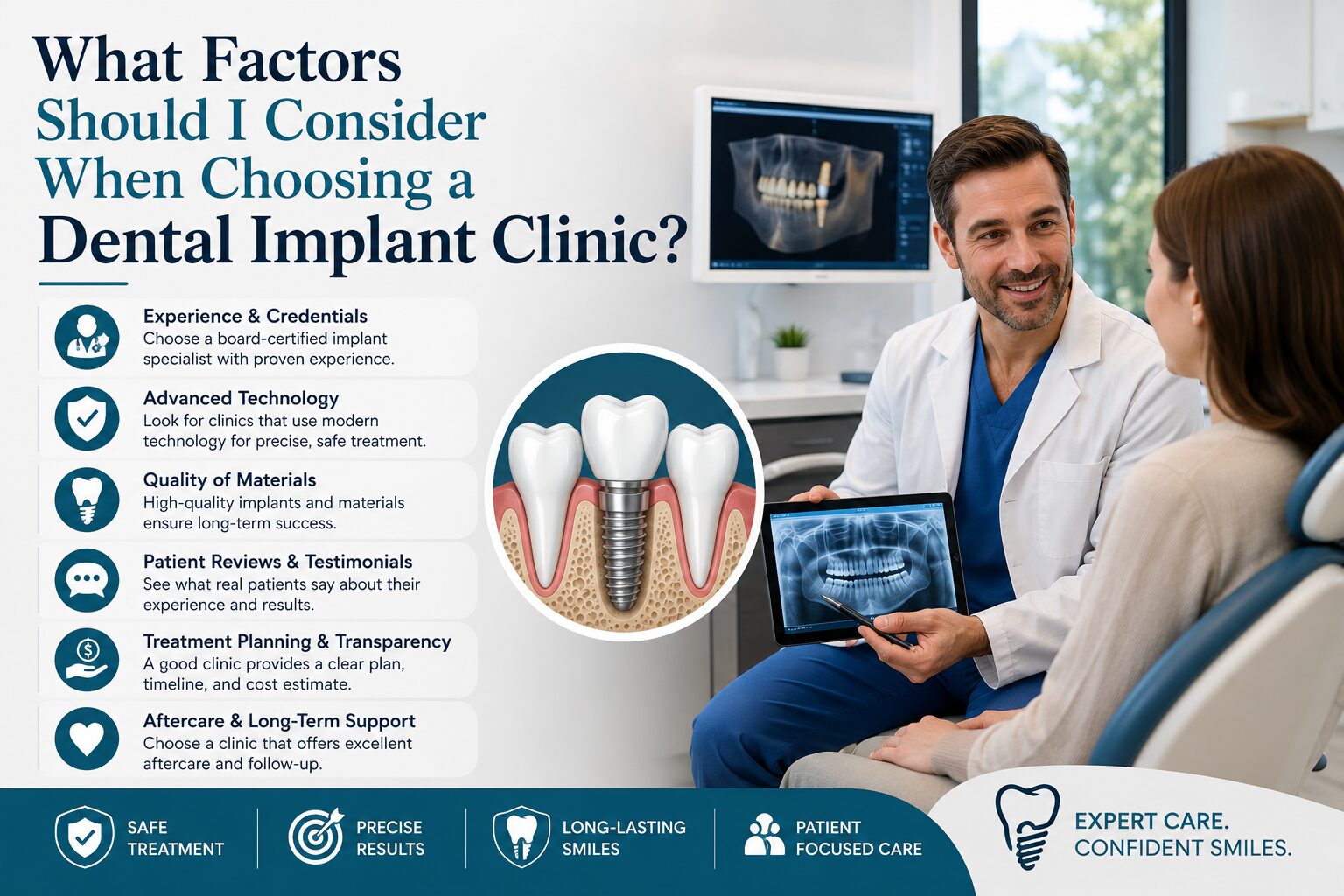
Here are the most important factors to consider when choosing a dental implant clinic.
Ready to Restore Your Smile?
Schedule a consultation with Dr. Robert Thein to find out whether a single dental implant is right for you.
1. Look at the Dentist’s Implant Experience
One of the first things to consider is how much experience the dentist has with dental implant treatment.
Dental implant procedures require careful diagnosis and planning. An experienced implant dentist should be able to evaluate your teeth, gums, jawbone, bite, and overall oral health before recommending treatment.
Ask:
- How long has the dentist been placing dental implants?
- How frequently does the dentist perform implant procedures?
- Does the dentist treat straightforward and complex implant cases?
- What type of implant procedures does the practice provide?
- Can the dentist explain the expected treatment process?
Experience is particularly important if you need multiple implants, full-mouth rehabilitation, bone grafting, or other complex procedures.
2. Check the Dentist’s Qualifications and Training
When choosing a dental implant clinic, review the dentist’s education, professional training, and experience.
A dentist who focuses heavily on implant dentistry may have additional education and training beyond general dental school.
Look for information about:
- Dental education
- Advanced implant training
- Professional certifications
- Continuing education
- Implant organizations and professional memberships
- Surgical experience
You should feel comfortable asking the dentist about their qualifications before beginning treatment.
3. Ask About the Dental Implant Technology Used
Modern implant dentistry can incorporate digital technology to improve diagnosis and treatment planning.
Depending on the clinic and your individual needs, technology may include:
- 3D CBCT imaging
- Digital X-rays
- Intraoral scanning
- Digital treatment planning
- Computer-guided implant surgery
- CAD/CAM technology
- Digital surgical guides
However, having the newest technology does not automatically make one clinic better than another. The important question is whether the technology is appropriate for your case and whether the dentist knows how to use it effectively.
Before choosing a clinic, ask which diagnostic and treatment-planning technologies are available.
4. Find Out What Happens During the Initial Consultation
A good dental implant clinic should provide a thorough consultation rather than immediately recommending a procedure.
During an implant consultation, your dentist may evaluate your oral health, missing teeth, gum condition, jawbone, bite, and aesthetic goals.
Depending on your situation, diagnostic imaging may also be recommended.
Use the consultation as an opportunity to ask questions about:
- Your implant options
- The number of implants you may need
- The treatment timeline
- Bone grafting requirements
- Implant restoration options
- Recovery
- Potential risks and complications
- Estimated treatment costs
- Follow-up appointments
A thorough consultation can help you understand whether dental implants are appropriate for you.
5. Consider Whether the Clinic Offers the Treatment You Need
Dental implant treatment is not the same for every patient.
Some people need a single dental implant, while others may need several implants or a full-arch restoration.
Depending on your needs, look for a clinic that has experience with procedures such as:
- Single-tooth dental implants
- Multiple dental implants
- Implant-supported bridges
- Implant-supported dentures
- Full-mouth dental implants
- All-on-4 dental implants
- Bone grafting
- Sinus augmentation
- Immediate-load implant procedures
Ask the dentist which treatment option is appropriate for your specific situation rather than assuming that one implant technique is right for everyone.
6. Review Patient Experiences and Before-and-After Results
Patient reviews can provide useful information when comparing dental implant clinics.
Look for consistent feedback about:
- Communication
- Professionalism
- Comfort
- Treatment experience
- Staff friendliness
- Follow-up care
- Overall patient satisfaction
Before-and-after photographs may also help you understand the type of implant cases the dentist has treated.
However, reviews and photographs should be considered alongside the dentist’s qualifications and clinical experience rather than used as the only reason to choose a practice.
7. Understand the Total Cost of Dental Implants
Cost is an important factor, but the cheapest dental implant treatment is not necessarily the best value.
The total cost may depend on several factors, including:
- Number of implants
- Type of implant restoration
- Diagnostic imaging
- Bone grafting
- Tooth extraction
- Abutments
- Crowns or bridges
- Surgical complexity
- Additional procedures
Ask the clinic for a detailed explanation of the expected costs and what is included in the treatment plan.
Be cautious about comparing clinics based only on an advertised starting price. Two treatment plans with different procedures and restorations may have very different total costs.
8. Ask About Patient Comfort and Sedation Options
Some patients feel anxious about dental procedures or implant surgery.
If comfort is a concern, ask the dental implant clinic what options are available to help you remain comfortable during treatment.
Depending on the practice and your medical history, options may include local anesthesia and various forms of dental sedation.
Your dentist should explain the available options, potential risks, and what you can expect before, during, and after the procedure.
9. Consider the Quality of Follow-Up Care
Dental implant treatment does not necessarily end when the implant is placed.
Follow-up appointments allow your dentist to monitor healing and evaluate the implant and restoration over time.
Before choosing a clinic, ask:
- How often are follow-up appointments scheduled?
- Who will monitor the healing process?
- What happens if you experience a problem after surgery?
- Does the practice provide ongoing implant maintenance?
- Who handles adjustments or restorative concerns?
A clinic that provides continuing care can make the overall treatment experience more convenient.
10. Choose a Convenient Location
Dental implant treatment may require multiple appointments over a period of time.
For that reason, location can be an important practical consideration.
Choosing a dental implant clinic near your home or workplace may make consultations, surgery, follow-up visits, and restorative appointments easier to manage.
Patients in and around La Crescenta, Glendale, Pasadena, Burbank, La Cañada Flintridge, Sunland-Tujunga, and Eagle Rock may want to consider an implant practice that is conveniently located within the area.
11. Make Sure the Dentist Explains Your Options Clearly
Good communication is an important part of choosing an implant dentist.
Your dentist should be willing to explain your diagnosis, treatment options, expected timeline, costs, potential risks, and alternatives in language you can understand.
Don’t hesitate to ask questions if something is unclear.
You should leave your consultation with a better understanding of:
- Why implants are being recommended
- What treatment options are available
- What the procedure involves
- How long treatment may take
- What recovery may involve
- What the expected costs are
A dentist who takes time to answer your questions can help you make a more informed decision.
12. Look for a Personalized Treatment Plan
There is no single dental implant treatment that works for every patient.
Your treatment should be based on factors such as your oral health, bone structure, missing teeth, bite, aesthetic goals, and overall treatment needs.
A personalized treatment plan should explain why a particular implant approach is recommended and what alternatives may be available.
Avoid choosing a clinic simply because it promotes one procedure as the solution for everyone.
Choosing a Dental Implant Clinic in La Crescenta, CA
If you are looking for a dental implant clinic in the La Crescenta area, consider a practice that focuses on implant treatment and provides personalized consultations.
Dr. Robert Thein is a board-certified dental implant surgeon in La Crescenta, CA, with an implant-focused practice. His education includes a DDS from Boston University and advanced surgical training at the Misch Implant Institute at the University of Pittsburgh.
Patients from La Crescenta and nearby communities can schedule a consultation to discuss their individual dental implant needs and available treatment options.
Questions to Ask Before Choosing a Dental Implant Dentist
Before scheduling your procedure, consider asking:
How many years of experience do you have with dental implants?
This can help you understand the dentist’s level of implant experience.
What type of dental implants do you recommend for my situation?
The answer should be based on your individual oral health and treatment goals.
Will I need bone grafting?
Some patients do not have sufficient bone volume for implant placement and may require additional treatment.
How long will my treatment take?
Treatment timelines vary depending on the number of implants and whether additional procedures are necessary.
What will my total treatment cost include?
Ask for a clear explanation of the fees associated with surgery, implants, abutments, restorations, imaging, and any additional procedures.