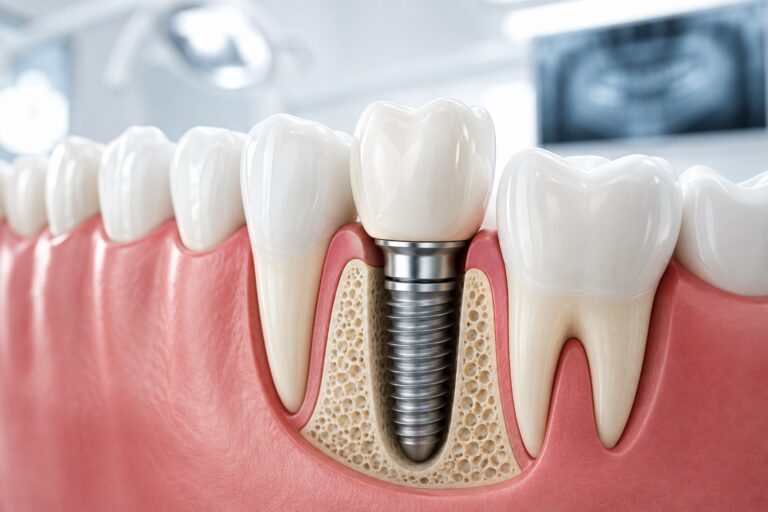
Missing teeth can significantly impact your ability to eat, speak, and smile confidently. For many patients, dental implants provide a long-lasting solution, but one common concern is whether treatment is still possible after experiencing jawbone loss.
The good news is that All-on-4 dental implants were specifically designed to help many patients who may not have enough bone for traditional dental implants. If you’ve been told that you have bone loss, you may still be a candidate for All-on-4 dental implants in Glendale.
Ready to discuss your options? Request an Implant Consultation with Dr. Thein.
What Causes Bone Loss in the Jaw?
Bone loss often occurs when missing teeth are not replaced for an extended period. The jawbone relies on stimulation from tooth roots to maintain its density and strength.
Common causes of bone loss include:
- Missing teeth
- Advanced gum disease (periodontitis)
- Long-term denture use
- Dental infections
- Trauma or injury
- Natural bone resorption over time
As the bone shrinks, it can become more difficult to support traditional dental implants.
Why Bone Loss Can Be a Challenge for Traditional Implants
Traditional dental implants typically require sufficient bone volume to securely support each implant post.
When significant bone loss is present, patients may need additional procedures such as:
- Bone grafting
- Sinus lifts
- Ridge augmentation
These treatments can increase both treatment time and cost before implants can be placed.
How All-on-4 Dental Implants Work
All-on-4 dental implants use four strategically positioned implants to support a full arch of replacement teeth.
Unlike traditional implant methods that may require six to eight implants per arch, All-on-4 treatment utilizes:
- Two front implants placed vertically
- Two rear implants placed at carefully angled positions
This unique approach helps maximize available bone and can often reduce the need for bone grafting.
Can Patients With Bone Loss Qualify for All-on-4 Dental Implants?
In many cases, yes.
One of the major advantages of All-on-4 dental implants in Glendale is that they are often suitable for patients who have experienced moderate bone loss.
Because the posterior implants are angled to engage stronger areas of the jawbone, many patients who have been told they lack sufficient bone for traditional implants may still qualify for All-on-4 treatment.
However, every patient is different, and a comprehensive evaluation is necessary to determine candidacy.
How Dentists Evaluate Bone Loss
Before recommending treatment, your implant specialist will perform a detailed assessment of your oral health.
This typically includes:
Digital Imaging
Advanced 3D CBCT scans allow the dentist to evaluate:
- Bone density
- Bone volume
- Jaw structure
- Nerve locations
- Sinus position
Oral Examination
Your dentist will assess:
- Gum health
- Remaining teeth
- Bite alignment
- Overall oral condition
Medical History Review
Certain medical conditions and lifestyle factors may influence treatment planning and healing.
When Bone Grafting May Still Be Necessary
Although many patients with bone loss can avoid grafting, some cases involve severe bone deterioration that may require additional procedures.
Bone grafting may be recommended if:
- Bone volume is extremely limited
- Implant stability cannot be achieved
- Significant structural support is needed
Your implant dentist will determine the most appropriate treatment plan based on your individual anatomy.
Benefits of All-on-4 Dental Implants for Patients With Bone Loss
Reduced Need for Bone Grafting
One of the biggest advantages of All-on-4 treatment is the ability to utilize existing bone more efficiently.
Faster Treatment Timeline
Avoiding bone grafting can often shorten the overall treatment process.
Full-Arch Restoration
All-on-4 can replace an entire upper or lower arch using just four implants.
Improved Stability
Unlike removable dentures, All-on-4 implants are fixed in place and designed to provide long-term support.
Enhanced Quality of Life
Patients often experience improvements in:
- Chewing ability
- Speech clarity
- Comfort
- Confidence
- Facial appearance
Also Read – 10 Signs You May Be a Good Candidate for Dental Implants
Signs You May Be a Candidate for All-on-4 Dental Implants
You may be a potential candidate if you:
- Have multiple missing teeth
- Wear dentures and want a more permanent solution
- Have been told you have some bone loss
- Want to restore your smile with fixed teeth
- Are in generally good health
- Maintain good oral hygiene
The best way to determine eligibility is through a consultation with an experienced implant dentist.
Why Early Treatment Matters
The longer missing teeth go untreated, the more bone loss can occur.
Seeking treatment sooner may:
- Preserve existing bone
- Expand treatment options
- Improve implant outcomes
- Reduce the need for additional procedures
If you have concerns about bone loss, scheduling an implant evaluation can help you understand your options before further deterioration occurs.
Choosing an Experienced All-on-4 Implant Specialist
Successful implant treatment depends heavily on proper planning, diagnosis, and surgical expertise.
An experienced implant dentist can:
- Evaluate your bone structure accurately
- Develop a personalized treatment plan
- Determine whether grafting is necessary
- Use advanced imaging technology
- Maximize long-term implant success