
Full-Mouth Dental Implant Reconstruction – Maggie’s Case
Maggie presented with broken teeth and loose bridgework. Her treatment combined grafting, dental implants and porcelain restorations to rebuild the mouth.
What Made This Case Unique?
Patient Story, Treatment & Results
The original case photographs and treatment details are preserved below and presented in a clearer, properly aligned format.
Maggie’s Full-Mouth Reconstruction: From Broken Teeth and Loose Bridgework to a Coordinated Implant-Restorative Plan
Maggie presented with broken teeth and loose bridgework, making this a comprehensive restorative problem rather than a single-tooth repair. Her published treatment combined bone augmentation, dental implants, crowns and porcelain veneers as part of a coordinated full-mouth reconstruction plan.
Cases like Maggie’s require the dentist to evaluate the mouth as a complete functional system. The condition of the remaining teeth, existing bridgework, available bone, gum health, bite, restorative space and smile all influence how implant surgery and restorative dentistry should be sequenced.
What Made Maggie’s Case Complex?
Maggie’s Treatment Progress & Restorative Result
The original clinical photographs from this case are preserved below. They are displayed at larger, consistent dimensions so the dental condition, treatment progression and restorative changes can be reviewed more clearly.

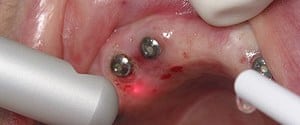
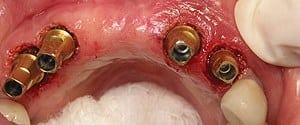
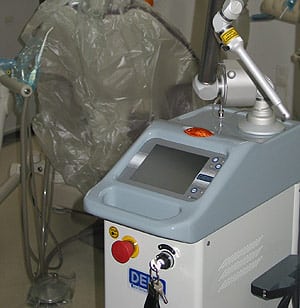
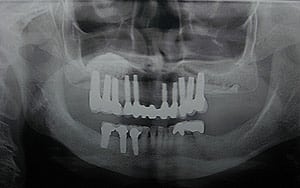
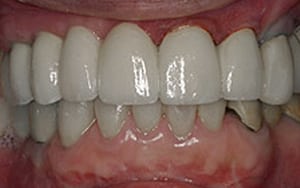

Why Broken Teeth and Loose Bridgework Require Comprehensive Planning
When multiple teeth are broken and existing bridgework is becoming loose, replacing one restoration at a time may not address the underlying restorative problem. The prognosis of each tooth, the support available for existing bridges and the overall bite must be evaluated together.
In a full-mouth reconstruction, the objective is to identify which natural teeth remain maintainable, which areas require replacement, whether the supporting bone is adequate for implant placement, and how all of the final restorations will function together.
Rebuilding the Foundation Before or During Implant Treatment
Maggie’s published case included bone augmentation. In implant dentistry, grafting may be considered when the existing ridge does not provide the volume or contour needed for the planned implant position and final restoration.
The need for grafting is individual. It is determined by the patient’s anatomy, the location of the missing teeth, the intended implant position and the restorative plan. Not every implant case requires bone augmentation.
How a Complex Implant Reconstruction Is Organized
A full-mouth dental implant reconstruction is not a single standardized procedure. The treatment sequence depends on the condition of the remaining teeth, bone support, restorative priorities, healing requirements and the design of the final bite.
Evaluate teeth, gums, existing bridgework, bite and potential implant sites before defining the final plan.
Natural teeth should be assessed individually rather than automatically removed as part of a full-mouth case.
Bone augmentation and implant positions are considered in relation to the intended final restorations.
Implant restorations, crowns and veneers must work together within the same bite and smile design.
Final restorations are developed after the necessary surgical and healing phases for that individual case.
Professional maintenance, home care and periodic bite evaluation remain important after treatment.
Why Maggie’s Surgical and Restorative Phases Had to Be Planned Together
In a comprehensive reconstruction, implant placement cannot be planned independently from the final teeth. Implant position affects restorative space, crown contours, hygiene access, bite and the way the final restorations relate to the remaining natural teeth.
Dr. Robert Thein personally manages implant planning, surgical placement and implant restoration at Boston Dental Care. This integrated approach is especially relevant in complex cases where implants, crowns, veneers and the overall bite must be coordinated.
Full-Mouth Reconstruction Does Not Automatically Mean Replacing Every Natural Tooth
Maggie’s case is a useful example of how complex reconstruction can combine implant dentistry with conventional restorative dentistry. Dental implants can replace selected missing or failing teeth while maintainable natural teeth may receive crowns, veneers or other appropriate restorative treatment.
This approach is different from assuming that every patient with extensive dental problems requires extraction of all remaining teeth. The correct plan depends on the prognosis and restorative value of each tooth.
Replace Missing or Non-Maintainable Teeth
Implant-supported restorations can provide independent support in selected areas when bone, gums, bite and health are suitable.
Restore Maintainable Teeth Where Appropriate
Crowns or porcelain veneers may be incorporated when natural teeth remain suitable for restorative treatment.
Complex Implant Reconstruction Is About Rebuilding a Functional System
Maggie’s published treatment combined bone augmentation, dental implants, crowns and porcelain veneers. The important clinical lesson is that complex treatment must be planned as one connected surgical and restorative process.
Case studies demonstrate treatment possibilities, not guaranteed outcomes. Another patient with broken teeth or failing bridgework may require a different combination of procedures based on their anatomy, tooth prognosis, bite, health and goals.
Discuss a Complex Implant Case With Dr. Robert Thein
Boston Dental Care is located at 3730 Foothill Blvd in La Crescenta, California. Dr. Robert Thein provides implant-focused surgical and restorative care for patients from La Crescenta, Glendale, Montrose, Pasadena, Burbank, La Cañada, Sunland, Tujunga, Eagle Rock and nearby communities.
Frequently Asked Questions
What is full-mouth dental implant reconstruction?
It is a comprehensive restorative approach for patients with multiple missing, broken or failing teeth in which implant dentistry and restorative treatment are planned together.
Does full-mouth reconstruction mean every tooth must be removed?
No. Each tooth should be evaluated individually. Maintainable natural teeth may be preserved and restored when clinically appropriate.
Why might bone augmentation be needed before dental implants?
Bone augmentation may be considered when the existing bone does not provide adequate support or contour for the planned implant position and final restoration.
Can dental implants be combined with crowns and porcelain veneers?
Yes. In selected full-mouth cases, implant-supported restorations can be coordinated with crowns or veneers on maintainable natural teeth.
How long does a complex full-mouth implant reconstruction take?
Treatment time varies according to the number of procedures, whether grafting is required, healing, implant integration and the restorative phases. A personalized plan is needed for timing.
Why is bite planning important in full-mouth reconstruction?
The bite affects how chewing forces are distributed across natural teeth, implants and restorations, so it is an important part of the restorative design.
Who coordinates implant surgery and restoration at Boston Dental Care?
Dr. Robert Thein personally manages implant planning, surgical placement and final implant restoration, allowing the surgical and restorative phases to be coordinated.
How do I know whether my case requires full-mouth reconstruction?
An examination is needed to evaluate the prognosis of the remaining teeth, existing restorations, bone, gums, bite and restorative goals before recommending a comprehensive plan.
Request an Individual Implant Evaluation
Bring your X-rays, previous treatment plan or implant records if available. Dr. Robert Thein can evaluate your current condition and discuss appropriate options.